Quick answer
Checked September 2026.
On a first trip to Chongqing, 2 to 3 days in the city is the normal pace. Five things not to miss: Hongya Cave after dark (see the whole lit-up front from Qiansimen Bridge or the far bank), the Liziba monorail through the building (the viewing platform is free; 20–40 minutes), the Yangtze River Cableway across the river (go in the morning to miss the peak queue before sunset), a hotpot dinner and a walk down through the old town (Shancheng Lane, Shibati or Baixiangju). Most sights in the city centre are free, and most are on the Yuzhong Peninsula. Plan by area, do the slopes and viewpoints by day and keep the evening for the riverside, and you will not keep doubling back. With a day or two more, add the Dazu Rock Carvings (about 1.5 hours by car) or Wulong (2.5–3 hours).
Want these in your private trip?
Send us your dates, how many of you there are and what you most want to see. We put the sights in order around their opening hours and the times the lights come on.
What are the top things to do in Chongqing?
If you only pick eight, pick these eight. The first five are in the city, most of them free, and you can see them in a day and a half to two days. The last three are the World Heritage sites outside the city and the Yangtze cruise, and each needs a full day of its own. What makes Chongqing is not any one building. It is how the city is built up the hills and cut apart by two rivers, so where you stand to look matters more than where you go.
- 1. Hongya Cave at night: stilted houses stacked up the cliff by the river, glowing gold after dark. Don't squeeze in among them: go onto Qiansimen Bridge or across the river to see the whole front.
- 2. The Liziba monorail through the building: Line 2 trains run straight through a block of flats. The viewing platform below is free, and a train comes every few minutes in each direction.
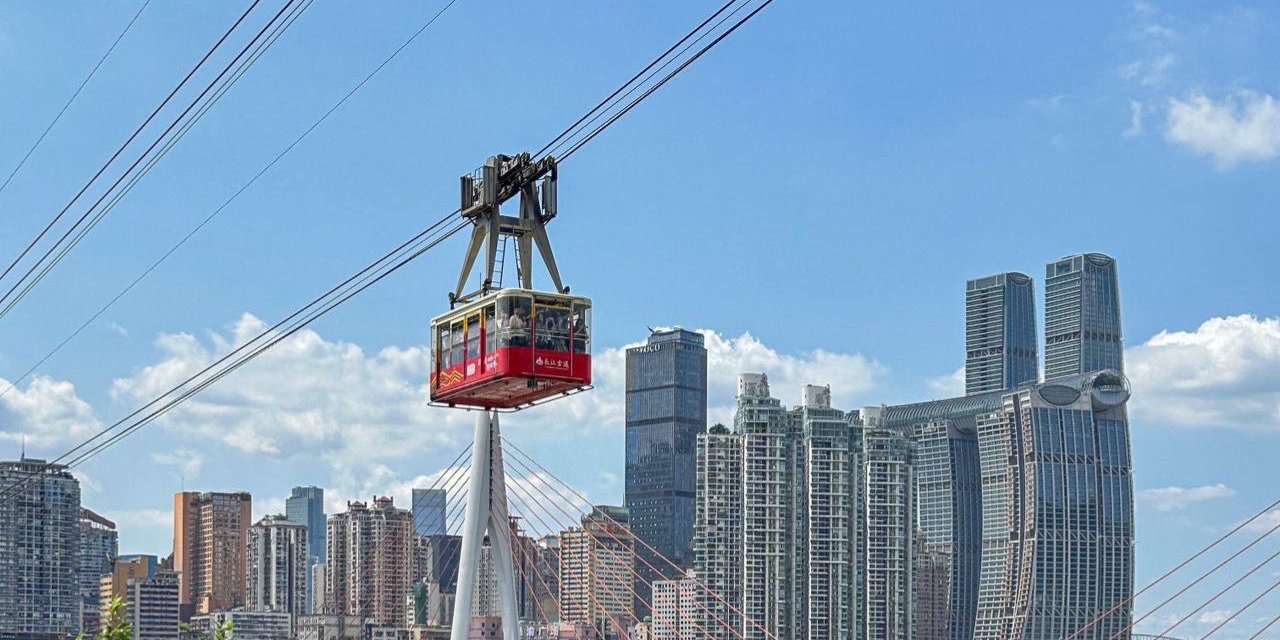
- 3. Yangtze River Cableway: a cable car across the Yangtze, from the Yuzhong Peninsula to Nan'an on the south bank. The crossing itself is quick. The queue is longest in the hour before sunset, so we ride it in the morning.
- 4. A walk down through the old town: Shancheng Lane, Baixiangju and Shibati, from the upper town all the way down to the river. This is where you see what the "8D city" means.
- 5. A Chongqing hotpot: an old-style hotpot place where locals eat, 60–80 yuan a head. If you can't take chilli, order a split pot.
- 6. Dazu Rock Carvings (World Cultural Heritage): cliff carvings a thousand years old, about 1.5 hours by car, an easy day there and back.
- 7. Wulong Karst (World Natural Heritage): sinkholes, the Three Natural Bridges and a slot gorge, 2.5–3 hours by car. Leave early, get back late.
- 8. Yangtze River Three Gorges cruise: board at Chaotianmen and sail downstream to Yichang in 3 nights and 4 days.
What sights are there in Chongqing? The full table, by area
The four tables below go by area. Each row says what the place is, how long it takes, the best time to go and whether you need a ticket, and the last column is our detailed page. The sights on the Yuzhong Peninsula link up on foot and by metro. Nan'an and Jiangbei across the rivers, and Ciqikou and the zoo in the west of the city, each need half a day of their own. Times are rough visiting times, not counting travel. Checked September 2026.
Table 1: Yuzhong Peninsula (around Jiefangbei and Hongya Cave)
| Place | Chinese name (show your driver) | What it is | How long | Best time | Ticket | Our page |
|---|---|---|---|---|---|---|
| Hongya Cave | 洪崖洞 | Stilted houses on the cliff by the Jialing River, lit gold at night | 1–2 hours in the evening | After dark; from 3 September 2026 the lights are on 19:30–23:00 | Free | Hongya Cave guide |
| Qiansimen Bridge | 千厮门嘉陵江大桥 | Walk onto the bridge to see the whole of Hongya Cave lit up: the classic angle | 20–30 minutes | After the lights come on | Free | Night views guide |
| Jiefangbei pedestrian street | 解放碑 | City-centre landmark: the 27.5-metre monument in the middle was finished in October 1947 as the Monument to the Victory of the War of Resistance and renamed the People's Liberation Monument in 1950; shopping malls and snack streets all round it | About 1 hour | Early evening into the night | Free | Where to stay |
| Shibati | 十八梯传统风貌区 | One of the oldest streets in the city, linking the upper and lower town; rebuilt along the old line of the steps and reopened in 2021 | About 1 hour | Quieter in the morning; busiest from afternoon to late at night | Free | Old town walking route |
| Shancheng Lane and the Mountain City Trail | 山城巷 | Old lanes clinging to the cliff, hill behind and river in front, downhill all the way | About 1.5 hours together with Baixiangju | Morning to midday, walking from the top down; have lunch around here | Free | Old town walking route |
| Kuixinglou and Baixiangju (8D buildings) | 魁星楼/白象居 | The ground and the floors don't line up: you stand in the street, and the building next door says 22nd floor | A short stop at each on the way | Baixiangju in the morning (busiest after 3 pm) | Free; people live in Baixiangju | 8D buildings |
| Yangtze River Cableway | 长江索道(新华路站) | Cable car across the Yangtze to Shangxin Street on the south bank | The queue depends on the season; the crossing itself is quick | Morning; avoid the hour before sunset (longest queue) | Paid | Yangtze River Cableway |
| Huguang Guild Hall | 湖广会馆 | Ming and Qing guild hall complex, a nationally protected heritage site; you can see Sichuan opera face-changing here | About 1 hour, plus the show if you watch one | Look round in the afternoon; for face-changing, go by that day's show times | Paid | — |
| Raffles City Exploration Deck | 来福士探索舱 | Viewing deck in a sky bridge 250 metres up, looking down on where the two rivers meet | About 1 hour | Go up an hour before sunset and watch the lights come on | Deck is paid | Raffles City Exploration Deck |
| Three Gorges Museum, Great Hall of the People | 三峡博物馆 | A big free museum; the Great Hall opposite has its own ticket | Half a morning or afternoon | Go when it opens; closed Mondays, no entry after 16:00 | Museum free | Three Gorges Museum |
| Liziba monorail through the building | 李子坝站 | Line 2 trains pass through a block of flats | 20–40 minutes | By day or at blue hour | Viewing platform free | Liziba |
| Eling Park and Eling No. 2 Factory | 鹅岭二厂 | Ridge-top park at the west end of the peninsula, with both rivers in view at once; No. 2 Factory is a creative park, popular for photos | About 1 hour | Daytime; on our day tour it comes in the afternoon, followed by Ciqikou | Free; the trestle walkway next to it needs a real-name booking | Metro guide |
| Chongqing Art Museum | 重庆美术馆(国泰艺术中心) | Right by Jiefangbei, a good place on a rainy day | 1–2 hours | 10:00–18:00, closed Mondays | Free | Tickets and ID rules |
Table 2: Across the rivers (Nan'an, Jiangbei)
| Place | Chinese name (show your driver) | What it is | How long | Best time | Ticket | Our page |
|---|---|---|---|---|---|---|
| Nanshan (One Tree viewing platform, Laojun Cave) | 南山一棵树 | A hill on the south bank of the Yangtze, looking over the whole Yuzhong Peninsula | Half a day | Go up in the afternoon for sunset and the lights | One Tree is paid | Nanshan viewpoints |
| Longmenhao Old Street, Xiahaoli | 龙门浩老街 | An old street lined with foreign trading houses after the port opened in 1891, where consulates and relocated schools moved in during the war against Japan; the Xiahaoli section opened in November 2022 | About 1 hour | After the cableway across the river, walk over from the station | — | Old town walking route |
| Danzishi Old Street | 长嘉汇弹子石老街 | A hillside old street themed on the treaty-port years, with an 80-metre drop from top to bottom and the old French naval barracks at its west end | About 1 hour | Early evening, to watch the far bank light up | Free | — |
| Nanbin Road | 南滨路 | A long riverside road, looking across the water at the Yuzhong Peninsula skyline | An evening | After dark | Free | Night views guide |
Table 3: West of the city (Ciqikou, the zoo, Gele Mountain)
| Place | Chinese name (show your driver) | What it is | How long | Best time | Ticket | Our page |
|---|---|---|---|---|---|---|
| Ciqikou Ancient Town | 磁器口 | An old wharf town on the Jialing River, with lots of snacks | 1–2 hours | Calmest on weekdays before 10:00; shops close between 21:00 and 22:00 | Free, never closes | Ciqikou |
| Chongqing Zoo (giant pandas) | 重庆动物园 | Plenty of pandas, so you can see them without going to Chengdu | One morning, together with Liziba | Opens 8:00, last entry 16:30; panda house 9:00–17:00 | Paid | Zoo pandas |
| Hongyan Village, Zhazidong, Baigongguan | 红岩村/渣滓洞/白公馆 | Historic sites from the war against Japan and the Chinese Civil War | Half a day | Opens 9:00; go in before 16:30 | Free, no booking needed | WWII history tour |
| Stilwell Museum | 史迪威博物馆 | General Stilwell's former home, the only museum in China named after a foreign soldier | About 1 hour | 9:00–17:00, last entry 16:30, closed Mondays | Free, register with your passport | WWII history tour |
| Huangjueping | 黄桷坪 | The old art school quarter: a graffiti street and an old 1980s teahouse | 1–2 hours | Afternoon | Free | See non-touristy Chongqing below |
Table 4: Evenings, food and outside the city
| Place | Chinese name (show your driver) | What it is | How long | Best time | Ticket | Our page |
|---|---|---|---|---|---|---|
| Two Rivers night cruise | 两江夜游 | A boat trip on the lit-up rivers, past Hongya Cave and the bridges | 45–50 minutes | Boats leave one after another from 19:30 to 22:00; the earlier the better | Paid | Two Rivers night cruise |
| Two Rivers Ferry Line B | 弹子石渡口 | The passenger ship company's loop ferry, on the same lit-up stretch of river, with no commentary | One loop | 18:30 every day from Danzishi ferry wharf, one sailing only | Paid | Two Rivers night cruise |
| Hotpot | 老火锅 | Red beef-tallow hotpot, which locals eat every day | 1–1.5 hours | Arrive for dinner before 6 pm for a shorter queue | 60–80 yuan a head | First-time hotpot |
| Noodles and street snacks | 重庆小面 | What locals eat for breakfast | Half an hour | Morning | Small street shops, cheap | Chongqing food |
| Dazu Rock Carvings | 大足石刻宝顶山 | World Cultural Heritage: Buddhist, Taoist and Confucian carvings | A full day (about 1.5 hours each way by car) | Leave in the morning; the visitor centre stops selling tickets at 16:00, so arrive before 4 pm | Paid | Dazu |
| Wulong Karst | 武隆天生三桥 | World Natural Heritage: sinkholes, natural bridges and a slot gorge | A full day (2.5–3 hours each way by car) | Leave at 7:00; closes at 16:30 from September to April | Paid | Wulong guide |
| Jiuli City | 蚩尤九黎城 | Miao-style gate towers by the Wujiang River in Pengshui | A full day (a bit further than Wulong; leave early, back late) | 8:30–17:30 | Paid | Jiuli City |
| More places outside the city | — | There and back in a day: Project 816 and the Wuling Mountain Grand Canyon, Fengdu, Diaoyu Fortress and Laitan in Hechuan, Jinfo Mountain, old towns nearby. Too far to do there and back in a day, so we don't suggest it: the Wujiang Gallery and Gongtan, and the Three Gorges by land. We can put any of these into your private trip. | One day, or two days or more | Leave in the morning | Depends where you go | Day trips from Chongqing · Three Gorges without a cruise |
| Yangtze River Three Gorges cruise | 朝天门码头 | Chongqing to Yichang, downstream in 3 nights and 4 days | 3–4 days | Board in the early evening; the ship sails at night | Booked separately | Cruise boarding guide |
How do you plan by area so you don't double back?
Split Chongqing into four areas: the Yuzhong Peninsula (Hongya Cave, Jiefangbei, Shibati, Liziba, Eling), the south bank of the Yangtze (across on the cableway, Nanshan, Nanbin Road), Jiangbei (Jiangbeizui, Guanyinqiao) and the west (Ciqikou, the zoo, Gele Mountain). Cross the rivers as little as you can in a day, and put places in the same area together. A place across the river can look close on the map, but on foot you have to go round by a bridge. Two streets side by side on the map can be more than ten floors apart.
- Our city day goes like this: Yangtze River Cableway → Baixiangju → Shancheng Lane (lunch) → the Liziba monorail through the building → Eling No. 2 Factory → Ciqikou → after dark, Hongya Cave from Qiansimen Bridge or the far bank. The cableway goes first thing in the morning, to miss the longest queue before sunset. The morning is in the lower town by the Yangtze, the afternoon heads west, and the evening brings you back to the river.
- Walk downhill, not uphill: the old town is steep. The car drops you at the top, you walk down, and the car waits at the bottom.
- Liziba and the zoo are both on Line 2, six stops apart. With children, you can do both in one morning.
- Ciqikou is in Shapingba, a long way from the peninsula: we put it in the afternoon, then head straight back into town for Hongya Cave. If you want Ciqikou at its quietest, find another weekday morning and go before 10:00.
- No metro station is called Jiefangbei. The closest are Jiaochangkou, Xiaoshizi and Linjiangmen.
- For more detailed plans, see how many days in Chongqing, 3 days in Chongqing and the one-day private tour.
What can you do in Chongqing at night?
Chongqing is best known for its night views, and at night the order matters more than the place. Before dark, get a spot by the river or on a bridge and watch the city light up bit by bit. Then go to Hongya Cave. After that, have dinner, or take the 45-minute Two Rivers night cruise. Don't squeeze into Hongya Cave to look at Hongya Cave: the best angles are from Qiansimen Bridge and the far bank.
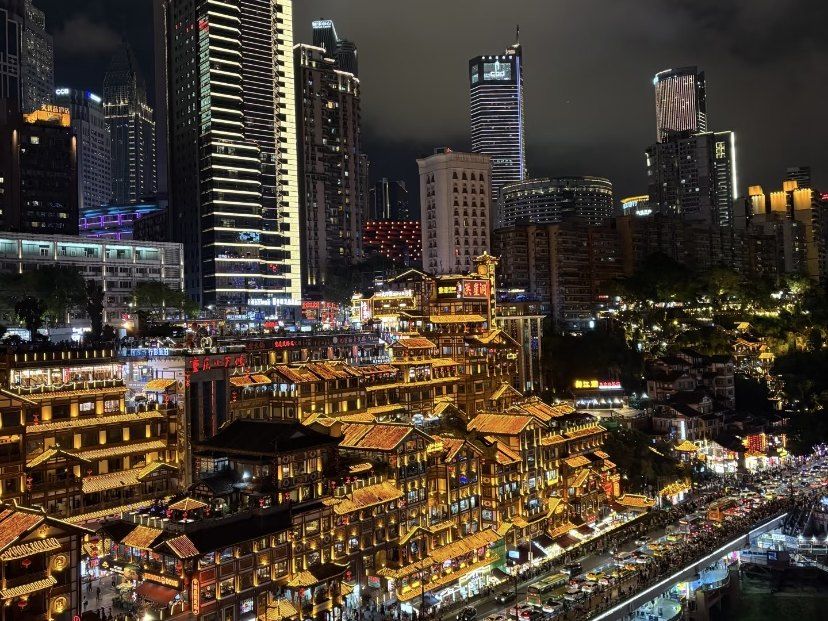
- Hongya Cave: from 3 September 2026 the lights are on 19:30–23:00. The times change several times a year, so check the notice for the day before you go.
- Two Rivers night cruise: the three ticket types board at Hongya Cave pier, Chaotianmen No. 7 pier and Chaotianmen No. 9 pier. Check which pier is printed on your ticket.
- Two Rivers Ferry Line B: a loop ferry run by the Chongqing passenger ship company. It leaves Danzishi ferry wharf at 18:30 every day, one sailing only, and goes by Jiangbeizui and Yemaoxi back to Danzishi. There is no commentary, but it covers the same lit-up stretch of river (these are the times announced when it started at the end of May 2026).
- The Yangtze River Cableway runs in the evening too: until 22:00 from March to November, and until 21:00 from December to February (the winter hours are announced separately at the end of November each year).
- The Raffles City Exploration Deck is open until 22:00. The best time to go up is an hour before sunset.
- Nanbin Road and Danzishi: look across the river at the Yuzhong Peninsula skyline.
- Drone shows: they sometimes run over the two rivers. The organisers announce the dates and times separately, and we plan around that week's notice.
- For how to string a whole evening together, see the night views guide and the private night tour.
Which sights in Chongqing are free?
Most of the big sights in the city centre need no ticket: Hongya Cave, Ciqikou, Shibati, the Liziba viewing platform, Eling No. 2 Factory, the Three Gorges Museum (permanent exhibitions), Hongyan Village with Zhazidong and Baigongguan, the Stilwell Museum, Chongqing Art Museum, Danzishi Old Street and Qiansimen Bridge. The ones you pay for are mainly the Yangtze River Cableway, the zoo, the Great Hall of the People, the Raffles City Exploration Deck, the Huguang Guild Hall and Nanshan's One Tree viewing platform, plus Dazu, Wulong and Jiuli City outside the city. For ticket prices, go by the scenic area's notice on the day. We book tickets for you at the actual price.
- Since 1 October 2025, neither the Three Gorges Museum nor the Hongyan sites need booking. Bring your original passport.
- The Eling trestle walkway next to Eling No. 2 Factory needs a real-name booking, for up to 3 people at a time.
- The Yangtze River Cableway stops for maintenance about one day a month, announced only a few days ahead.
- For all the rules on tickets, bookings and passports, see tickets, bookings and ID.
What are some non-touristy things to do in Chongqing?
To see the Chongqing that locals know, go to three kinds of place: old food markets in the morning and village markets outside the city, old teahouses, and the quieter bank of the river and its old streets. Everything below has a source we could check, or is something we have put into a guest's itinerary. None of it is about ticking off a photo spot. It works because someone takes you in, asks for you and orders for you.
- Market days: many towns outside Chongqing still hold a market every three days, going by the last digit of the date: the 1st, 4th and 7th, the 2nd, 5th and 8th, or the 3rd, 6th and 9th. People sell vegetables, free-range chickens and woven bamboo. Mornings are the liveliest.
- Shihuishi food market: an old food market around Jiaochangkou, a short walk from Jiefangbei. It is liveliest in the morning, you hardly ever see foreign tourists there, and there is no ticket.
- Jiaotong Teahouse (Huangjueping): an old teahouse made in 1987 from a transport company's canteen, and it still looks the way it did in the 1970s and 1980s: old wooden beams, old tables and chairs, and Huangjueping neighbours who come in early for their tea. Next to it is the graffiti street around the old art academy, where the walls on the main street carry copies of artists' works. It is about 40 minutes' drive from the city centre and, like Chongqing West station, in the west of the city, so it fits in on the way to a train from Chongqing West.
- Shancheng Lane: old lanes clinging to the cliff, linking the upper and lower town, with old houses on one side and the Yangtze on the other. It opened in 2021, and you can walk downhill all the way to the river.
- Longmenhao Old Street and Xiahaoli: on the south bank of the Yangtze. After Chongqing opened as a treaty port in 1891, foreign trading houses lined the street, and during the war against Japan consulates from many countries moved in. It covers 380 mu (about 25 hectares) and is the largest and best-preserved historic district left in the main city. Take the cableway across and walk over from the station.
- Danzishi Old Street: an old street on Nanbin Road themed on the treaty-port years, with an 80-metre drop from top to bottom and the old French naval barracks at its west end. Go in the early evening, with the Yuzhong Peninsula right across the river.
- Take the ferry instead of a cruise: Two Rivers Ferry Line B leaves Danzishi ferry wharf once a day at 18:30 and does one loop, with no commentary. Most people on board are locals.
- Sichuan opera face-changing at the Huguang Guild Hall: a complex of Ming and Qing guild halls, rebuilt in the Qianlong reign of the Qing dynasty. If you don't understand Chinese, face-changing is easier to follow than an opera with long sung passages.
Which sights are better done a different way?
The trouble with Chongqing's popular sights is not that they aren't worth it. It is going at the wrong time or looking from the wrong angle. These are the changes we make most often when we plan a trip. Each one means less queuing, fewer crowds and a fuller view.
- Hongya Cave: you can't see Hongya Cave from inside it. Walk through once by day, then at night see the whole lit-up front from Qiansimen Bridge or the far bank. Holiday evenings are the busiest, and roads around it are closed to traffic for a while, so cars can't get to the door.
- Ciqikou: the main street is mostly snacks and souvenirs. What is worth seeing is the back lanes and the riverside stretch. 1–2 hours is enough; for quiet, go on a weekday morning.
- Shibati: the line of the steps is old, but the houses were rebuilt in 2021. For older lanes, add a stretch of Shancheng Lane.
- Yangtze River Cableway: the queue is longest in the hour before sunset. We put the cableway in the morning, or board at the south bank station, which is a bit quieter.
- Liziba: the station is being renovated, due to finish at the end of 2026. Trains still stop as normal in the meantime, but some entrances are closed, so follow the signs on site.
- Baixiangju: people live in these blocks. It is busiest after 3 pm, so go in the morning and keep your voice down.
How many days do you need in Chongqing?
In 2 days you can see the main sights in the city; 3 days is more relaxed. Allow 4 days if you want Dazu and 5 days if you want Wulong, as each takes a full day. With only one day, stay in the city and don't go to Wulong. It is 2.5–3 hours each way and closes at 16:30 from September to April, so that day is only enough for Wulong, and the city's slopes, the cableway and the riverside all have to go.
- 1 day: see the one-day private tour.
- 2–3 days: see 3 days in Chongqing and how many days in Chongqing.
- 4–5 days: add Dazu and Wulong. See the itinerary ideas and the pricing page, which has guide prices for multi-day trips with Dazu or with Wulong.
- Coming in winter: on foggy days, swap to close-up sights; for snow, go to Fairy Mountain or Jinfo Mountain. See Chongqing in winter.
Where to go on a rainy day, with children or with older travellers?
On a rainy day, go indoors or under cover: the Three Gorges Museum, Chongqing Art Museum, the Raffles City Exploration Deck. With children, Liziba and the zoo pandas are on the same metro line, and one morning covers both. With older travellers, take fewer steps and use the car more, and pick museums with lifts and places with flat paths. The guide plans how many steps to take and where to rest around your energy and pace.
- Every gallery in the Three Gorges Museum has a lift, and the front desk lends wheelchairs and pushchairs free against a deposit.
- The Yangtze River Cableway's notice for passengers says it is not suitable for people with heart disease, high blood pressure or a fear of heights, or for some older people with limited mobility.
- See Chongqing with kids and Chongqing for seniors.
On a private tour, how do we show you round?
We send a car, a driver and a licensed English-speaking guide, and pick you up at your hotel door. We can also arrange a Chinese-speaking guide if you need one. The car is yours until 23:00, and the guide stays with you for the whole agreed route, so the slopes by day and the rivers at night can go on the same day. When we plan, we check which sights need booking on your dates. Cableway maintenance days are only announced a few days ahead, so a few days before you set off we check that week's maintenance and Hongya Cave lighting notices again.
- Planned by area: places in the same area go together, with less crossing back and forth over the rivers. On downhill walks, the car waits at the bottom.
- The car fits the group: 2 people with a guide ride in a 7-seater, 3–4 people in a 7-seater, 5–6 people in a 9-seater and 7–8 people in a 15-seater. For more people, tell us how many of you there are and we match the vehicle to the group. If you have a lot of luggage, tell us how many large suitcases and we match the vehicle to the luggage.
- Just transfers is fine too: airport pickup, station pickup and drop-off at the cruise pier can be booked on their own. For two guests on a one-way transfer without a guide, we send a 5-seat car. On your arrival day the driver meets you with a name sign; a guide comes only if you are sightseeing that day. We time the car to your flight or train.
- Outside the city too: Dazu, Wulong, Project 816, Fengdu, Diaoyu Fortress, Jinfo Mountain, old towns nearby, the Wujiang Gallery and the Three Gorges by land. We can put any of them into your private trip.
- Worked back from the clock: the cableway goes in the morning, to miss the peak queue before sunset; museums as soon as they open; and for Dazu and Wulong, we set the start time by when they close.
- We order and ask for you: hotpot spice levels, noodles, food markets, teahouses. The guide does the talking.
- Tickets are booked at the actual price and written into your quote, with no mark-up.
- For prices, see the pricing page. Multi-day trips all have guide prices there.
FAQ
In the city, five things: Hongya Cave after dark, the Liziba monorail through the building, the Yangtze River Cableway, a hotpot, and a walk down through the old town (Shancheng Lane, Baixiangju or Shibati). With a day or two more, add the Dazu Rock Carvings (about 1.5 hours by car) or Wulong (2.5–3 hours). Both are World Heritage sites.
2 days covers the main sights in the city, and 3 days is relaxed. Allow 4 days if you want Dazu and 5 days if you want Wulong. With only one day, stay in the city.
Hongya Cave, Ciqikou, Shibati, the Liziba viewing platform, Eling No. 2 Factory, the Three Gorges Museum's permanent exhibitions, Hongyan Village with Zhazidong and Baigongguan, and the Stilwell Museum are all free. The Yangtze River Cableway, the zoo and the Raffles City Exploration Deck need tickets. For prices, go by the scenic area's notice on the day. We book them at the actual price.
Before dark, find a spot by the river or on a bridge and watch Hongya Cave light up (19:30–23:00 from September 2026). Then have hotpot, or take the 45-minute Two Rivers night cruise. The best angles on Hongya Cave are from Qiansimen Bridge and the far bank.
Walk round an old food market in the morning, go to a market day in a town outside the city (one every three days), drink tea at the Jiaotong Teahouse in Huangjueping, walk Shancheng Lane, Longmenhao Old Street and Danzishi Old Street, and see the two rivers from Two Rivers Ferry Line B, which leaves Danzishi ferry wharf at 18:30 every day.
Not from inside it. Walk onto Qiansimen Bridge, or go to the far bank of the Jialing River, and you see the whole lit-up front of stilted houses. Holiday evenings are the busiest, and roads around it are closed to traffic for a while.
Yes. Both are on Rail Transit Line 2, six stops apart. Liziba takes 20–40 minutes. The zoo opens at 8:00 and the panda house is open 9:00–17:00, so one morning is enough.
Bring your original passport. You show ID to get into the Three Gorges Museum, the Hongyan sites and the Stilwell Museum, and to board the Two Rivers night cruise. Some mini programs only accept Chinese ID cards; if so, buy your ticket at a staffed window.
Jiefangbei, or a riverside hotel near it, for most first-time visitors. Hongya Cave, the malls and the old-town walks are within walking distance, and Jiaochangkou, Xiaoshizi and Linjiangmen metro stations are close by. Nanbin Road across the river has some of the strongest skyline views, but every trip then starts with a river crossing. A hotel near the airport only makes sense for a very early or very late flight. See where to stay in Chongqing.
March to May and September to November: daytime highs of 17–28°C, so the hills and stairs are walkable. Of those months, April, May and September have the most sunshine. July and August reach 34°C by day, so we put the open-air sights after sunset. December and January get only 17–18 hours of sunshine a month, and long views often disappear in the fog, though the night views and the food are unaffected. Avoid the six 2026 public-holiday windows, or put the busiest sight first thing in the morning. See best time to visit Chongqing.
Metro for direct journeys, a car for a full sightseeing day. Fares go by distance from 2 yuan, a one-day ticket is 18 yuan, the staffed window at every station takes foreign bank cards, and all 13 lines announce stops in Chinese and English. No station is called Jiefangbei: use Jiaochangkou, Xiaoshizi or Linjiangmen. Two streets side by side on the map can be more than ten floors apart, so for a day of several sights go area by area with a car, which drops you at the top of the old town and waits at the bottom. See the metro guide and how to get around Chongqing.
Plan your days in Chongqing
Tell us how many of you there are, which days, and whether you want the city or nature. We will plan a Chongqing trip that goes area by area, with no doubling back. Places outside the city such as Dazu, Wulong, Project 816 and Fengdu can go into your private trip too.