Quick answer
Checked September 2026.
The 816 Underground Nuclear Project is at Baitao, in Fuling District, Chongqing. It is the site of an underground nuclear plant: building was approved in 1966, it was declassified in 2002 and it opened to visitors in 2010. The main cavern is 79.6 m high. The Wuling Mountain Grand Canyon (also called Wulingshan Grand Canyon or the Great Rift Valley) is about 40 km south-east of Fuling town. It is a national 5A scenic area, and the full trail is about 8.9 km, which takes about 3 hours to walk. From central Chongqing it is about 1.5–2 hours' drive to 816, and the two places are about 30 minutes to 1 hour apart by car. By private car you can see both in one day: 816 in the morning, the canyon in the afternoon.
Want this day in your Chongqing trip?
Send us your dates and how many of you there are. We plan the route and the timing, book the tickets for you at the actual price, and a car, a driver and an English-speaking guide take you through the day.
The two places at a glance
| 816 Underground Nuclear Project | Wuling Mountain Grand Canyon | |
|---|---|---|
| What it is | A nuclear materials plant built inside a mountain in the 1960s–80s, stopped before it ever went into production | A karst canyon: sheer cliffs, a slot canyon, a suspension bridge and a cableway |
| Grade | National 4A (July 2019) | National 5A (February 2024) |
| Where | Baitao Subdistrict, Fuling District | About 40 km south-east of Fuling town, in Wulingshan Township |
| Time needed | About 1.5–2.5 hours (including the shuttle bus) | The full route is about 8.9 km, about 3 hours at a normal pace |
| Opening hours (checked September 2026; go by the scenic area's notice on the day) | April–October about 9:00–17:00; November–March about 9:00–16:30 | April–October about 8:30–16:00; November–March about 9:00–15:30; entry by timed booking |
| Walking | Steps inside the tunnels; the floor can be wet | Up and down slopes, plank walkways and a suspension bridge; there is also a cableway |
| Who it suits | People who like history, Cold War sites and industrial buildings. It is mostly underground, so rain makes little difference | People who can walk mountain paths for 3 hours and are not too nervous of heights |
Both are run by the same scenic area company, Chongqing Fuling Wulingshan Tourism Development Company (Chongqing list of A-grade scenic areas).
What is the 816 Underground Nuclear Project?
Project 816 was China's second nuclear materials industrial base. Building was approved in 1966 by the Central Military Commission and Premier Zhou Enlai. Over the years more than 60,000 people worked on it, and the total investment was 746 million yuan. The whole project is hidden inside Jinzi Mountain, beside the Wujiang River: 104,000 square metres were dug out, with 18 large caverns and more than 130 roads, pilot tunnels, side tunnels, tunnels and shafts. Added together along their length, the tunnels run to more than 20 km.
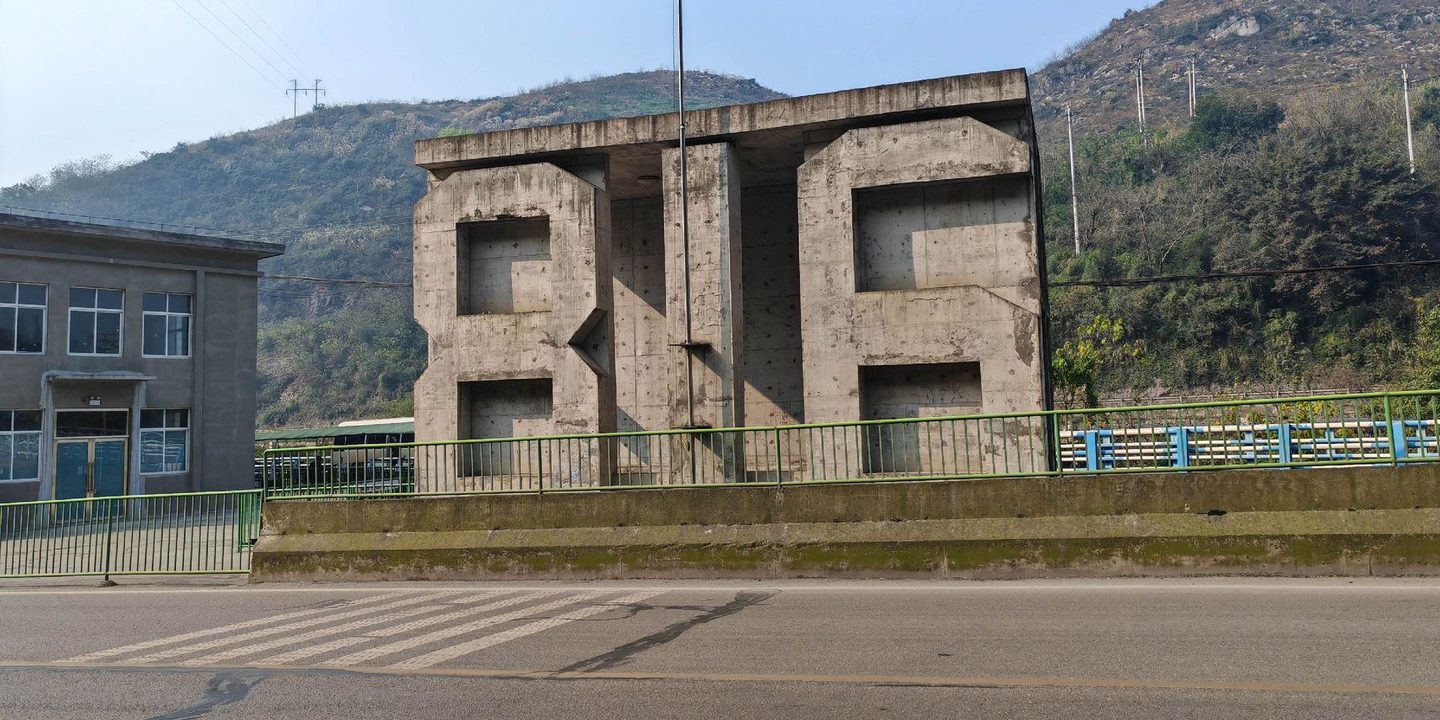
The biggest cavern is the reactor hall, 79.6 m high, about the height of a building of more than twenty floors. In 1984 national strategy changed and the project was stopped, when about 85% of the civil works was finished. It was declassified in April 2002 and first opened to visitors in April 2010. Today it is a national 4A scenic area and a protected heritage site at Chongqing municipal level, and it is on China's list of 20th-century architectural heritage.
Why was it built inside this mountain?
Choosing the site took two years. The survey teams visited more than 90 places and drew up 17 plans, and in the end they chose Jinzi Mountain at Baitao in Fuling, for three reasons. The mountain is hard limestone formed about 200 million years ago, far from earthquake zones. It sits right by the Wujiang River, so there was plenty of cooling water for the reactor. And the mountain is high, thickly wooded and foggy for much of the year, which fitted the Third Front rule of building "close to the mountains, spread out, hidden and in caves". The cavern walls are about 1.2 m thick and can withstand an earthquake of magnitude 8 or more. The people who built it "told neither their parents above nor their wives and children below". On the drive to Fuling, our guide tells you this story.
Is there radiation at 816? Is it safe to visit?
The reactor never went into production, so no nuclear radiation was left behind, according to an article published on the Chongqing Daily website in April 2026. Today the scenic area is a patriotic education base and a place for science learning, and school groups and work groups visit.
Inside the tunnels, two other things matter. It is cool all year, around 16°C, so bring a light jacket even in summer. There are steps, and the floor is wet in places, so wear flat shoes with a good grip.
What do you see inside 816, and how long does it take?
Most people spend 1.5 to 2.5 hours at 816, including the scenic area's shuttle bus into the tunnels. Inside, the scenic area's guides take visitors round in groups at set times.
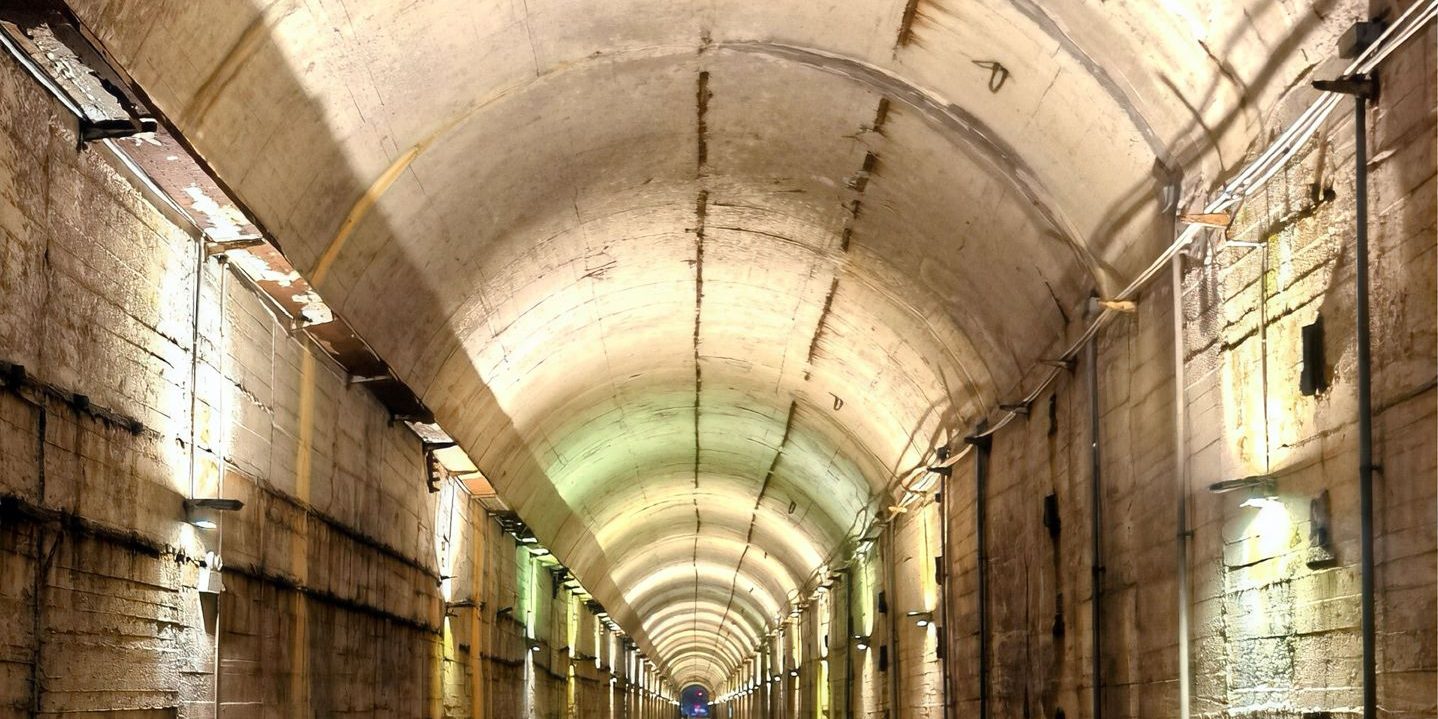
The main things you see:
- Reactor Hall 101: the main cavern, 79.6 m high, where a graphite water-cooled reactor was meant to go.
- The instrument room and other core areas of the project.
- The water intake tunnel: the channel that brought cooling water in from the Wujiang River.
- Tunnel No. 7: the wall paint, put on decades ago, still shines like new. Titanium was added to the paint.
- Third Front exhibits: history boards, old tools and documents from the time.
- Two themed halls opened in May 2026: one on the lives of the 23 scientists honoured for China's "Two Bombs, One Satellite" programme, and one on the history of China's nuclear industry.
Since January 2024 the tunnels have also hosted an immersive live show, Dongjian 816, about the builders who dug the tunnels. The show has its own times and tickets. If you want to see it, tell us and we plan around that day's show times.
The scenic area's guides speak Mandarin, and there is not much English signage in the tunnels. Our English-speaking guide explains the history in English on the drive to Fuling, and not just the numbers: why this mountain was chosen, how 60,000 people lived and worked in secret, and why it stopped at 85% built.
Is the Wuling Mountain Grand Canyon worth it, and how do you walk it?
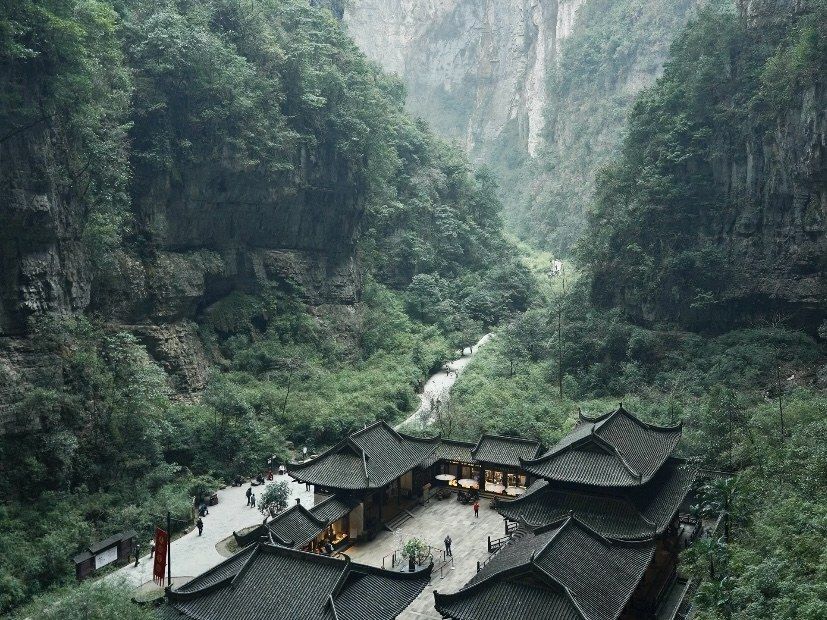
Yes, if you want to see a real canyon near Chongqing without going as far as Wulong. The canyon became a national 5A scenic area in 2024. Its average altitude is about 1,300 m, so it is cooler than the city, and in 2026 it was named one of China's model cases for summer leisure travel.
The scenic area's own figures: the full route is about 8.9 km, made up of about 3.2 km of sightseeing-bus road, 3.9 km of footpath, 1.4 km of plank walkway and a 0.4 km "time tunnel". At a normal pace it takes about 3 hours. The main sights:
- Tianmendong Suspension Bridge: 180 m long, with a main span of 140 m, and 2.5 m wide. It crosses from Tianmen Cave to Fengyakou.
- Qingtian Gorge slot canyon: 1.5 km long, with sheer cliffs on both sides. The walkway runs along the cliff face.
- Wuling Taidou Cableway: a slope of 42.6°, a vertical drop of about 300 m and 634 m long along the slope. The scenic area calls it "the steepest in Asia".
- The Copper and Iron Wall: a long stretch of rust-coloured cliff. The Tianmendong Suspension Bridge starts from here.
Inside the scenic area there are two ways down to the canyon floor: by cableway, or on the stepped path. We choose based on the slowest walker in your group.
Can you see 816 and the canyon on the same day?
Yes, by private car you can see both in one day. This is also the route that the scenic area's official site recommends: Chongqing, Fuling, 816, then the Wuling Mountain Grand Canyon. The two are about 30 minutes to 1 hour apart by car, and Fuling's "503 Journey to the Centre of the Earth" loop road (about 81.6 km long) links them with the towns along the way.
We suggest 816 first and the canyon second, for three reasons. It is the order the scenic area's official site recommends. 816 opens at 9:00, so arriving in the morning lets you join a guided group without rushing. Entry to the canyon is by timed booking and there are afternoon slots too, so after the canyon you get straight back in the car to the city, with nothing else to hurry to.
How do you plan the day? (Our timing)
| Time | What you do |
|---|---|
| 07:30 | Leave your hotel and take the expressway to Baitao, Fuling |
| About 09:15 | Arrive at 816 and take the shuttle bus into the tunnels |
| 09:30–11:30 | Visit 816, with the scenic area's guides taking groups round at set times |
| 11:30–12:30 | Lunch in Baitao |
| 12:30–13:15 | Drive to the canyon |
| 13:15–16:30 | The canyon: suspension bridge, slot canyon, cableway |
| About 19:00 | Back at your hotel in the city |
Drive times: the city to 816 about 1.5–2 hours, between the two about 30 minutes to 1 hour, and the canyon back to the city about 1.5–2 hours.
In winter (November to March) both places close earlier. We move the start time earlier and plan by that day's notices.
The car is yours until 23:00, and the guide stays with you for the whole agreed route. It is a day with a lot of walking, so after you get back we usually suggest an early night. If you would like to stay a night in Fuling, tell us.
How do you get there from Chongqing? Should you take the high-speed train?
From the city centre to 816 is about 120 km, about 1.5–2 hours on the expressway.
There are high-speed trains to Fuling North station, but from there you still have to change to a bus or a taxi to reach 816 or the canyon, and there is no easy direct public transport between the two.
So for this day we only go by car: one driver and one licensed English-speaking guide (we can also arrange a Chinese-speaking guide), from your hotel door and back to your hotel door. The vehicle fits the group: 2–4 guests plus the guide get a 7-seat car, 5–6 guests a 9-seater and 7–8 guests a 15-seater. For a bigger group, tell us how many of you there are and we match the vehicle to the group. The car, driver and guide come together and are not sold separately. The reasons are on how our prices work.
What should you get ready before you go? (Checklist)
- Passport: tickets at both places are sold in your real name, and foreign visitors use their passport. For the rules, see Chongqing attraction tickets and passports.
- A light jacket: inside 816 it is around 16°C all year, so you will want it even in summer.
- Flat shoes with a good grip: there are steps inside 816 and the floor can be wet; the canyon has long flights of steps and plank walkways.
- Tell us in advance who cannot walk far and who is nervous of heights: we use this to decide whether to take the cableway, and whether to swap the canyon for Baiheliang.
- Avoid Chinese public holidays if you can. If you have to go on a holiday, tell us your dates as early as you can.
- Eat a good breakfast: we leave at 07:30, and lunch is around 11:30.
What if the canyon is too much? What else can you do instead?
The canyon has a suspension bridge, a steep cableway and long flights of steps, and the scenic area's own visitor notice says that visitors with heart and circulation conditions, a fear of heights or poor health should take care before going in. In these cases we swap the afternoon for the Baiheliang Underwater Museum. It is in Fuling town, a national 4A site run by the Chongqing China Three Gorges Museum, where you see ancient hydrological inscriptions from the Yangtze. It is a museum visit, with no mountain paths. For groups with several older travellers, 816 plus Baiheliang makes an easier day.
It works the other way too: if you prefer mountains and rivers, you can do just the canyon and take your time over it.
When is the best time to go?
Both are open all year. Summer is the most comfortable time for the canyon: at an average altitude of about 1,300 m, it is cooler than the city. Inside 816 it is around 16°C all year, so it is also a place to escape the heat. When it snows in winter, the canyon's snow scenery is a highlight the scenic area's official site itself recommends.
Avoid Chinese public holidays if you can. Over the 2026 Qingming holiday, 816 had more than 5,000 visitors that day by 2 pm, and on 5 April 2026 the canyon was fully booked and stopped selling tickets at 12 noon. On weekdays both are much more relaxed.
Can you visit 816 on a Three Gorges cruise?
Some ships stop at Fuling. Take the 2025 downstream itinerary of Yangtze Gold Cruises' Changjiang Qiji as an example: day 2 is in Fuling, with a choice of one of 816, Baiheliang or the canyon. So on a cruise you can usually see only one of them, and the ship decides how long you stop. To see both 816 and the canyon, keep a full day before you board or after you get off, and go by private car. For how to plan boarding day, see boarding a Three Gorges cruise from Chongqing.
What can you arrange for us on this day?
- We plan the route in the order above and adjust it to your pace.
- We book tickets for both places at the actual price; go by the scenic area's notice on the day.
- The day before, we check both scenic areas' notices, and if the visitor route has changed we tell you in advance.
- The car is yours until 23:00, and the guide stays with you for the whole agreed route, telling the story of 816 in English on the way. The driver waits in the car park.
- Tickets and meals are not included in the day rate. The quote lists each item clearly.
Send us your dates, how many of you there are and how much walking everyone can manage, and we reply with a plan and a quote for this day. WhatsApp us or see our private tours.
Which day trip from Chongqing should you pick?
| Day trip | Drive each way | What you see | Who it suits |
|---|---|---|---|
| 816 + Wuling Mountain Grand Canyon | About 1.5–2 hours | A Cold War underground nuclear plant and a karst canyon | History fans, and people who want both man-made and natural sights in one day |
| Wulong Karst | About 2.5–3 hours | The Three Natural Bridges, World Natural Heritage | First-time visitors choosing just one natural site |
| Dazu Rock Carvings | About 1.5 hours | Rock carvings that are World Cultural Heritage | People who like religious art and want less walking |
| Jiuli City, Pengshui | About 2 hours | Miao architecture and an evening show | People who want to see ethnic minority culture |
For more on each, see our Wulong guide, Dazu Rock Carvings and Jiuli City pages.
Add this day to your private trip
We can put the 816 and Wuling Mountain Grand Canyon day into your private itinerary, together with your days in Chongqing city. Send us your dates and how many of you there are.
FAQ
No. The reactor never went into production, and an article published on the Chongqing Daily website in April 2026 says no nuclear radiation was left there. Today it is a national 4A scenic area, and school groups often visit. Inside it is around 16°C all year, so bring a light jacket.
Yes, by private car. The two are about 30 minutes to 1 hour apart by car. We usually leave at 07:30, do 816 in the morning and the canyon in the afternoon, and get back to the city around 19:00.
It is in Baitao Subdistrict, Fuling District, about 120 km from the city centre and 1.5–2 hours by car. If you take the high-speed train to Fuling North, you still have to change, so for this trip we use a private car, with pickup and drop-off at your hotel door.
Most people spend 1.5 to 2.5 hours, including the shuttle bus into the tunnels. The scenic area's guides take groups round at set times, to the reactor hall, the instrument room, the water intake tunnel and the two halls that opened in 2026.
Checked September 2026: April to October about 9:00–17:00, and November to March about 9:00–16:30. Go by the scenic area's notice on the day. It is very busy on public holidays, and we check that day's notice before we set off.
The full route is about 8.9 km, about 3 hours at a normal pace, with steps, plank walkways, a 180 m suspension bridge and a very steep cableway. The scenic area advises visitors with a fear of heights or heart and circulation conditions to take care before going in. If it is too much, you can swap the afternoon for the Baiheliang Underwater Museum in Fuling town, with no mountain paths.
The scenic area's guides speak Mandarin, and there is not much English signage in the tunnels. With us, your English-speaking guide explains the history in English on the drive to Fuling: why this mountain was chosen, how 60,000 people lived and worked in secret, and why it stopped at 85% built.
Some ships stop at Fuling, usually with a choice of one of 816, Baiheliang or the canyon. To see both 816 and the canyon, keep a full day before you board or after you get off, and go by private car.