Quick answer
Checked September 2026.
The Nationalist government moved to Chongqing at the end of 1937. In 1940 the city was formally named the auxiliary capital (peidu), and it stayed China's wartime capital until the war ended. You can see four things in one day: the Stilwell Museum at Liziba and the Flying Tigers museum across the street (both free, closed on Mondays); the Anti-Japanese War Relics Museum on Nanshan, which is Chiang Kai-shek's Huangshan residence; the Great Bombing site at Jiaochangkou and its wartime air-raid tunnel; and finally Jiefangbei, first named the Monument to the Victory of the War of Resistance. Go Tuesday to Sunday. A private car linking them up is the easiest way.
Want this wartime-capital route in your private Chongqing trip? Send us your dates and how many of you there are. One car, one driver and one licensed English-speaking guide pick you up at your hotel. The car is yours until 23:00, and the guide stays with you for the whole agreed route. WhatsApp us
Why is Chongqing called China's wartime capital in WWII?
On 20 November 1937 the Nationalist government issued its declaration on moving to Chongqing, and government offices followed one after another. On 6 September 1940 it formally named Chongqing the auxiliary capital by decree. Throughout the war, Chongqing was the political, military and diplomatic centre of China, and the command centre of the Allied China Theatre. That also made it a main target for Japanese bombing: the raids went on for nearly seven years, from February 1938 to December 1944.
- Diplomatic centre: more than 30 countries set up embassies or legations in Chongqing. The American mission arrived in March 1938, and the Soviet Union was the first country to formally open an embassy here. In 2013 these former sites were listed together as a national key heritage site, under the name "Former Sites of Allied Diplomatic Missions in Chongqing".
- Americans in Chongqing: Stilwell arrived in March 1942 as Chief of Staff of the China Theatre and commander of US forces in the China-Burma-India Theatre. In July 1942, the US air force units led by Chennault moved into Baishiyi airfield in Chongqing. In Chinese they are usually all called the "Flying Tigers".
- Roosevelt's scroll: in 1944 President Roosevelt wrote a scroll by hand for Chongqing, praising its people for staying firm and calm under one heavy air raid after another. In the courtyard of the Stilwell Museum stands a stone carved with Roosevelt's words.
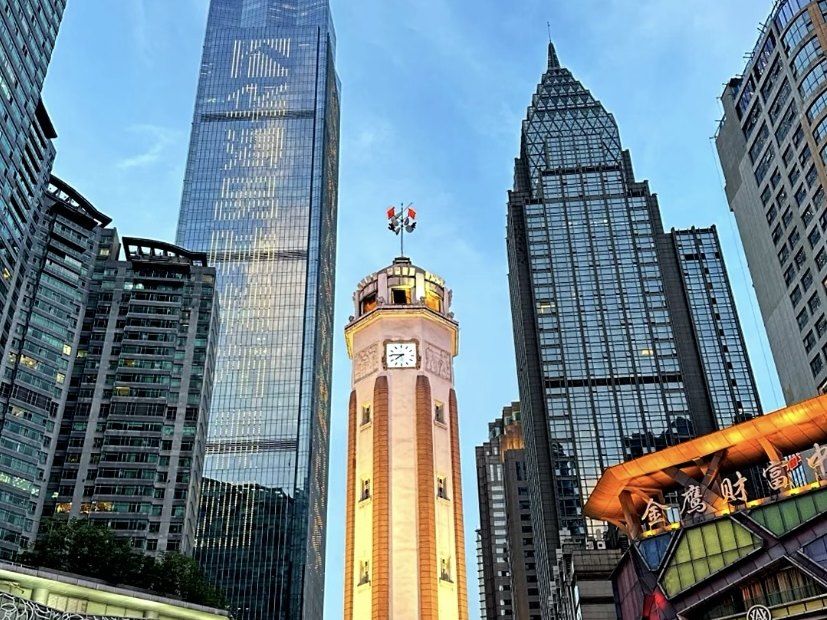
- Jiefangbei: after the victory, the Monument to the Victory of the War of Resistance was built in the city centre. It was finished in October 1947, renamed the People's Liberation Monument in 1950, and stands 27.5 metres tall. The official description says it is the only monument in China to the victory in the war against Japan.
Which places are on this route? Opening hours and tickets
The main route has five stops: the Stilwell Museum, the Flying Tigers museum, the Anti-Japanese War Relics Museum at Huangshan, the Great Bombing site at Jiaochangkou and Jiefangbei. The first two face each other across the street at Liziba. They are free and closed on Mondays. Huangshan is on Nanshan, on the south bank of the Yangtze. It charges for entry and is open every day. The bombing site is at Jiaochangkou, next to Jiefangbei. It is free and open every day. With an extra day, add the Jianchuan Museum at Xiejiawan. It is built in the air-raid shelters of a wartime arsenal.
Table 1: The sites, hours and tickets (Checked September 2026)
| Place | What to see | Where | Hours | Ticket | Mondays | Time to allow |
|---|---|---|---|---|---|---|
| Stilwell Museum | Stilwell's residence of 1942–1944, furnished as it was, and the underground exhibition hall | 63 Jialing Xinlu, Yuzhong District (Liziba) | 9:00–17:00, last entry 16:30 | Free, no booking; register with your passport to go in | Closed (open on public holidays) | About 1 hour |
| Flying Tigers museum | Photos and objects from the American air force that helped China | 62 Jialing Xinlu, across from the Stilwell Museum | 9:00–17:00 | Free | Closed | About 30 minutes |
| Anti-Japanese War Relics Museum at Huangshan (Huangshan residence) | 15 former sites, including Chiang Kai-shek's residence Yunxiu Lou, Soong Mei-ling's Pine Hall and Lianqing Lou, where the American military mission stayed | 1 Zhiwuyuan Road, Nanshan, Nan'an District | 5 March–15 October 9:00–18:00; 16 October–4 March 9:00–17:30; ticket sales stop an hour before closing | Paid. Go by the scenic area's notice on the day for the price; we book at the actual price | Open | About 1.5 hours |
| Chongqing Great Bombing Site Exhibition Hall | Site of the 5 June 1941 tunnel disaster: the exhibition hall and a stretch of the wartime tunnel | No. 4, 87 Jiaochangkou, Yuzhong District, next to Jiaochangkou metro station | Opens 10:00; go in before 17:30 | Exhibition hall free | Open | About 45 minutes |
| Jiefangbei (Monument to the Victory of the War of Resistance) | The victory monument, finished in 1947 | Centre of Jiefangbei pedestrian street | Open air, any time of day | Free | Open | 15 minutes |
| Jianchuan Museum (optional) | A group of halls built in air-raid shelters at the old arsenal site (51 shelters survive here), including the former arsenal museum and the Chongqing Civil Air Defence History Exhibition | Xiejiawan, Jiulongpo District | 9:00–17:30 | Paid. Go by the scenic area's notice on the day for the price; we book at the actual price | Open | About 2 hours |
The times to allow are a guide. Adjust them to how fast you walk.
What is there to see at the Stilwell Museum, and do I need to book?
No booking, and it is free. It opens Tuesday to Sunday, 9:00–17:00, with last entry at 16:30, and closes on Mondays (but opens on public holidays). You register with your passport to go in. This was Stilwell's residence in Chongqing from March 1942 to October 1944: two floors plus a basement. It opened as a museum in 1994, and it is the only museum in China named after a foreign soldier.
- The house: a small brick-and-concrete building from the early war years. It was first the home of T.V. Soong (Song Ziwen), then a guesthouse for the Nationalist government's important visitors. Inside are Stilwell's bedroom, office, meeting room and dining room, plus rooms for his aides, interpreters and guards.
- The basement: the walls are reinforced concrete 0.5 metres thick. It was used as an air-raid shelter and is now an exhibition hall on the China-Burma-India front, the Hump airlift and the Stilwell Road.
- In the courtyard: a bust of Stilwell, and a stone carved with Roosevelt's words.
- Who he was: a US Army general, Chief of Staff of the Allied China Theatre and commander of US forces in the China-Burma-India Theatre. He was in charge of training the Chinese army in India and opening the road from India to China. He later disagreed with Chiang Kai-shek, and the US government recalled him in October 1944.
- In 2013 it was listed as a national key heritage site.
Are the Flying Tigers museum and the Stilwell Museum the same place?
No, but they face each other across Jialing Xinlu, so it is easiest to see them together. The Flying Tigers museum is at No. 62. It is a private museum, free, open 9:00–17:00 and closed on Mondays. It began in 2003 as a Flying Tigers exhibition in an art gallery and took its present name in 2015. Inside are old photos of the American air force that helped China, and objects people have donated.
- Who the "Flying Tigers" were: at first, the American Volunteer Group that Chennault set up in 1941. In Chinese, "Flying Tigers" is also often used for the US air force units Chennault commanded later. In July 1942 those units moved into Baishiyi airfield in Chongqing.
- Why Chongqing: as the wartime capital, Chongqing was bombed by Japan year after year, and China's own air force was weak at the time. Help from the American air force mattered a lot to the city.
- After both, walk a short way down the slope and you reach Liziba War Relics Park (next section).
Can you walk the history downhill from Eling to Liziba?
Yes, and it is mostly downhill. Eling Park → the Flying Tigers and Stilwell museums → Liziba War Relics Park → the Liziba monorail viewing platform: you are walking down towards the Jialing River nearly the whole way. Our car drops you at the top of the slope and picks you up at the bottom, so you never walk back uphill.
- Eling Park: the park has a memorial to Soviet airmen who died in the war, and the former Australian and Turkish legations from the war years. Both are part of the Allied diplomatic missions group.
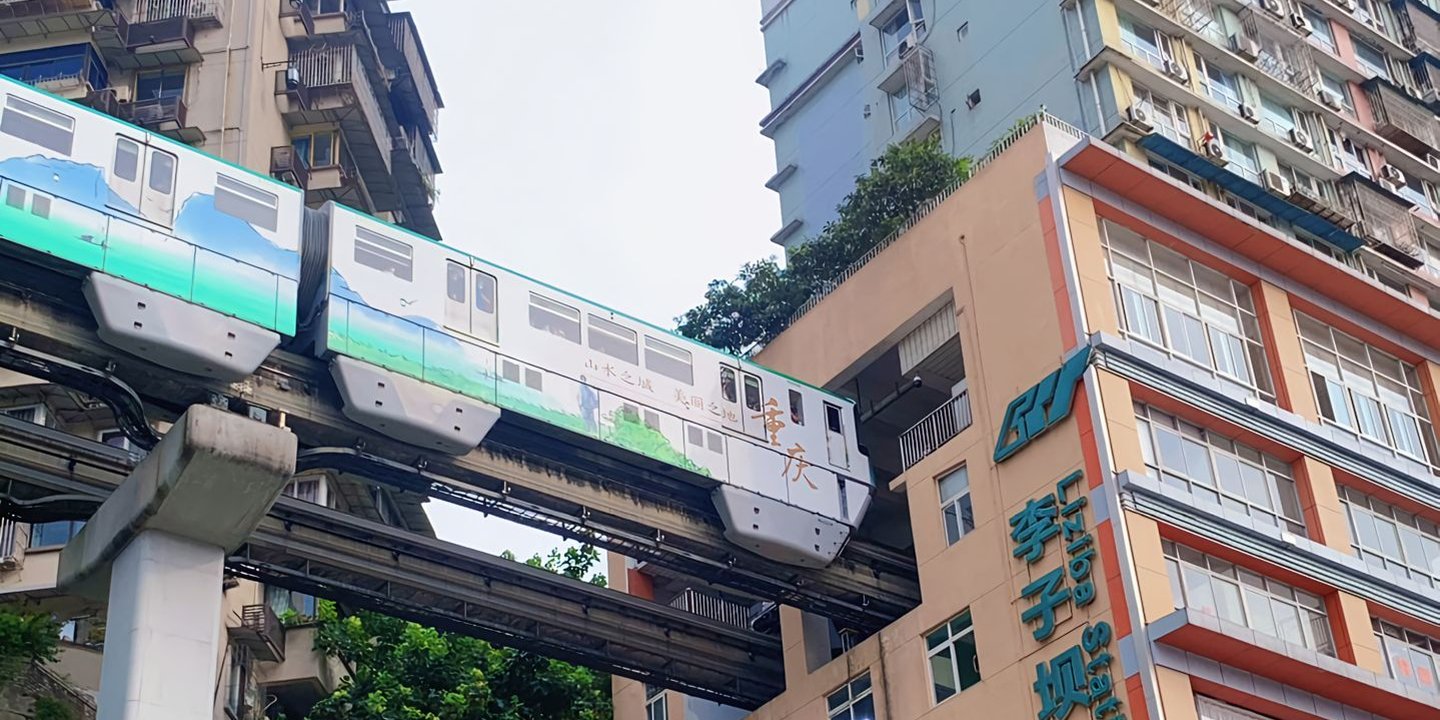
- Liziba War Relics Park: below the Stilwell Museum, on the Jialing River. It has wartime buildings, some moved here and some on their original sites: bank buildings, residences and a few pillboxes. At the north end of the park is the viewing platform for the monorail through the building.
- Liziba monorail: 20 to 40 minutes is enough to watch a few trains pass through the building. Liziba station is still being renovated. For which exit to use, see the latest notes in our Liziba monorail guide.
- The US embassy also had premises in this area during the war (at Jialing Xincun in Liziba, among other places).
Is the Huangshan museum (Chiang Kai-shek's Huangshan residence) worth the trip up Nanshan?
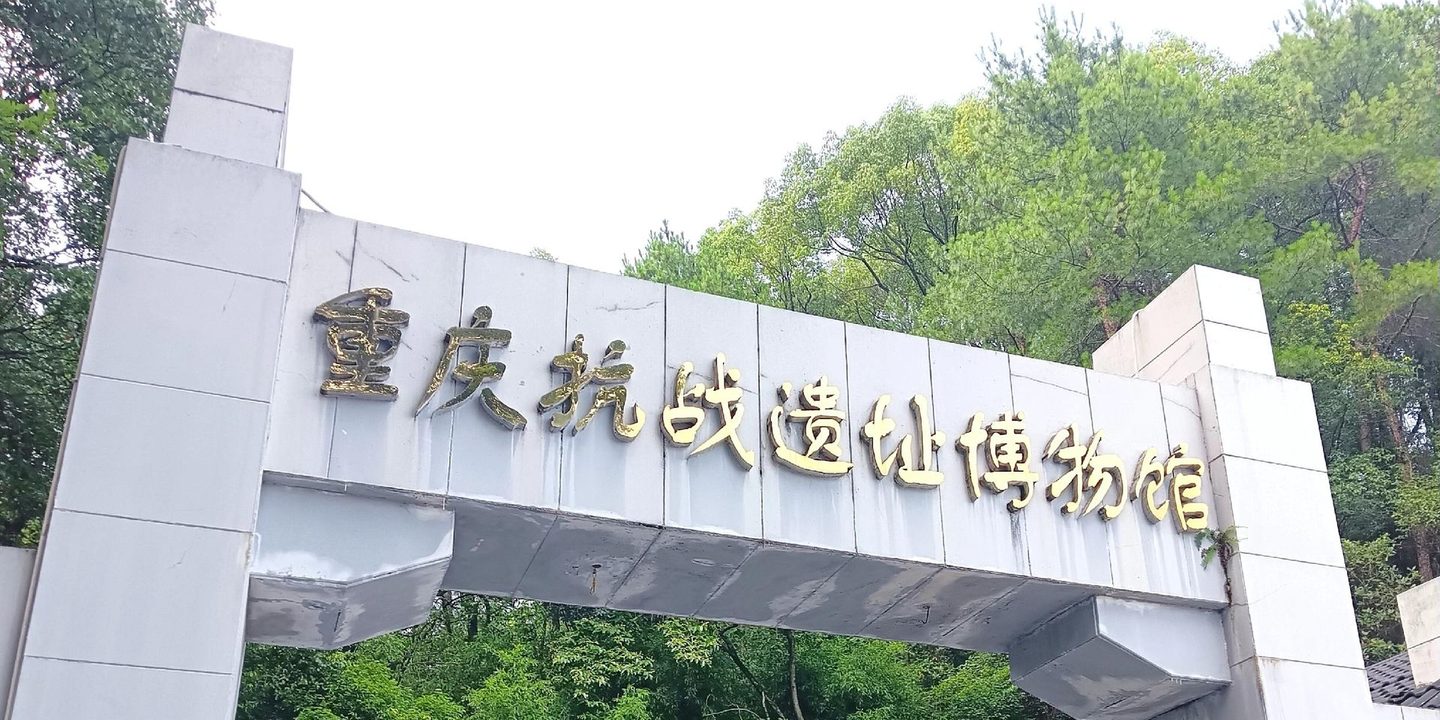
If you are interested in WWII history, yes. It is a large group of wartime sites with well-kept buildings: 15 former sites survive, spread along the hillside in the woods of Nanshan. From autumn 1938 this was where Chiang Kai-shek worked and lived in Chongqing. After the China Theatre was set up, it became one of the Allied command centres in the Far East. Allow 1.5 hours, and go in the morning.
- Yunxiu Lou: Chiang Kai-shek's residence, a brick-and-timber building in mixed Chinese and Western style, with a ground floor and two floors above. Many important military and diplomatic meetings were held here.
- Pine Hall (Songting): Soong Mei-ling's home, a single-storey house with a veranda all round, hidden in a pine wood.
- Lianqing Lou: where the American military advisory group was based during the war.
- Huangshan School: a school for the children of officers killed in the war. The old building still stands.
- Air-raid tunnel: built in 1938, it runs through the hill under Yunxiu Lou. It is about 200 metres long, with three passages in a Y shape, and served as an underground command post during air raids.
- How to plan it: open 5 March to 15 October 9:00–18:00, the rest of the year 9:00–17:30, and ticket sales stop an hour before closing. So the morning is the safest time. Afterwards, go on to the Nanshan viewpoints (see our Nanshan viewpoints half day) or head back down to the city.
- You can borrow a wheelchair or walking stick free of charge for a deposit. The sites are spread through the woods. The guide decides which ones to walk to and where to rest along the way, by your energy and pace.
Where can I see air-raid shelters in Chongqing?
The one most worth seeing is the Great Bombing Site Exhibition Hall at Jiaochangkou. During the air raid of 5 June 1941, the "5 June" disaster happened in the big tunnel here. The exhibition hall is free, and you can go down into a stretch of the wartime tunnel. Two more: the Y-shaped tunnel, about 200 metres long, under the hill at the Huangshan residence; and the Jianchuan Museum, whose halls are built inside a wartime arsenal's air-raid shelters.
- Bombing site (Jiaochangkou): next to Jiaochangkou metro station, about 480 metres, about 6 minutes on the flat from Jiefangbei. Since 1998, Chongqing has sounded its air-raid sirens every 5 June to remember the dead. The top of Shibati is also at Jiaochangkou. To add a walk through the old town, see our old town walking route.
- Jianchuan Museum (Xiejiawan): this is where the Hanyang Arsenal, founded by Zhang Zhidong during the Self-Strengthening Movement, moved when it came west to Chongqing. In the war it was the Ordnance Department's No. 1 Arsenal. The arsenal dug 107 caves along the north bank of the Yangtze as workshops. At the museum site 51 air-raid shelters survive, and the halls are built inside them. They include the Museum of the Former No. 1 Arsenal (three connected caves, showing Hanyang-made rifles among other things) and the Chongqing Civil Air Defence History Exhibition.
- Three Gorges Museum: for an overall picture first, the half-panorama of the wartime bombing of Chongqing is one of the four highlights at the Three Gorges Museum. It is free and closed on Mondays. See our Three Gorges Museum guide.
- Many of Chongqing's old air-raid shelters are now hotpot restaurants, teahouses and food markets. You come across them often around the city.
How do I plan the day, and what if it's a Monday?
Tuesday to Sunday: the Huangshan residence in the morning, back to the city at noon, then the Liziba area in the afternoon for the Flying Tigers and Stilwell museums and the monorail. Go to the Great Bombing site at Jiaochangkou in the late afternoon, and finish with a walk to Jiefangbei. On Mondays the Stilwell, Flying Tigers and Three Gorges museums are all closed, so switch to Huangshan + the Jianchuan Museum + Jiaochangkou + Jiefangbei.
Table 2: A sample day (adjust it to your hotel and pace)
| Time | Tuesday to Sunday (main route) | Monday (alternative) |
|---|---|---|
| 08:30 | Pickup at your hotel, then across the river and up Nanshan (the drive depends on where your hotel is; we work back from your hotel to set the start time) | Same |
| 09:00–10:30 | Anti-Japanese War Relics Museum at Huangshan | Same |
| 11:00–12:30 | Back to the city, lunch | Back to the city, lunch |
| 13:00–15:00 | Downhill from Eling: Flying Tigers → Stilwell Museum (go in before 16:30) → Liziba War Relics Park | 13:30–15:30 Jianchuan Museum (Xiejiawan) |
| 15:00–15:30 | Liziba monorail through the building | — |
| 16:00–16:45 | Great Bombing site at Jiaochangkou (go in before 17:30) | Same |
| 17:00 | Walk to Jiefangbei and see the victory monument; hotpot for dinner | Same |
Only half a day: skip Nanshan and do just the Liziba stretch + Jiaochangkou + Jiefangbei, about 4 hours. We can plan half a day too, and quote for your time slot (to combine it with other city sights into a full day, see our one-day Chongqing tour). The afternoon before a Yangtze cruise is also enough; see boarding at Chaotianmen.
What other sites are there from the wartime capital years?
Central Chongqing has a dozen or more other wartime sites. Adding one or two to the main route is enough: Guiyuan (where the Double Tenth Agreement was signed in 1945), Yiyuan (where Marshall stayed when he came to mediate at the end of 1945), Hongyan Village, the former site of the Provisional Government of the Republic of Korea, and the Three Gorges Museum. The three Hongyan sites are free with no booking needed. For times, see our attraction tickets and booking guide.
- Guiyuan (65 Zhongshan 4th Road): once Zhang Zhizhong's residence. During the Chongqing negotiations of 1945 it was Mao Zedong's home in the city, and the Double Tenth Agreement was signed here.
- Yiyuan (19 Sixin Road, T.V. Soong's former residence): Marshall stayed here after arriving in Chongqing on 22 December 1945. On 10 January 1946, the first agreement between the Nationalists and the Communists to stop military clashes was signed at Marshall's residence. It has been open as a museum since 2018.
- Hongyan Village: during the war, the base of the Southern Bureau of the Communist Party Central Committee and of the Eighth Route Army office in Chongqing.
- Former site of the Provisional Government of the Republic of Korea (38 Lianhuachi): the Korean provisional government's last office in Chongqing. Free, 9:00–17:00, closed on Mondays.
- Former Roosevelt Library (11 Changjiang 1st Road, Lianglukou): the only library in China named after a foreign president. It is now a children's library; see it from the outside.
- Former US Embassy (Lianglukou area): you can see it from the outside as you pass.
Is this route suitable for older travellers? How much walking is there?
Yes. The key is the order. At Liziba the car drops you at the top of the slope and you walk down the whole way. At Huangshan the sites are spread through the woods; the guide decides which ones to walk to and where to rest, by your energy and pace. Jiaochangkou to Jiefangbei is flat. Chongqing's rules give free entry from age 65, but sites apply this differently to foreign passports. Bring your original passport.
- The Stilwell Museum has two floors and a basement, with steps.
- At Huangshan you can borrow a wheelchair or walking stick free of charge for a deposit.
- In summer, do Nanshan in the morning and the indoor museums in the afternoon.
- Bring your original passport: you register with ID to enter the Stilwell Museum, and the paid sites also need ID when you buy tickets.
- More: Chongqing for seniors and senior-friendly Chongqing tours.
What is this route like with us?
We are a licensed local travel agency in Chongqing (licence L-CQ-100787). The day is one complete unit: one car, one driver and one licensed English-speaking guide pick you up at your hotel. The car is yours until 23:00, and the guide stays with you for the whole agreed route. Before we set off, we check each museum's notice for that day, set the order by the day of the week, and set the pace by the slowest walker in your group. For paid sites, go by the scenic area's notice on the day for the price. We book at the actual price with no mark-up.
- We don't sell the car and the guide separately: a driver doesn't narrate, and a guide doesn't drive. We can also arrange a Chinese-speaking guide.
- The car matches your group size: a 7-seat car for 2–4 guests, a 9-seat for 5–6, and a 15-seat for 7–8. For a bigger group, tell us how many of you there are and we match the vehicle to your numbers.
- In the car and on foot, the guide links these places into one story: why the capital moved here, who lived where, and how the bombing changed the city.
- For how pricing works, see Chongqing private tour pricing. We quote this day separately for your group size and dates.
- To fit it into a longer trip: how many days in Chongqing and private Chongqing tours. If you are coming on the 240-hour visa-free transit, see our Chongqing airport layover guide.
Want this day in your trip?
Tell us your dates, how many of you there are, and what you most want to see: Stilwell, Huangshan or the air-raid shelters. We can build this day into your private trip.
FAQ
No. It is free, there is no booking, and you register with your passport to go in. It opens Tuesday to Sunday, 9:00–17:00, with last entry at 16:30, and closes on Mondays (but opens on public holidays). The address is 63 Jialing Xinlu, Yuzhong District, in the Liziba area.
At 62 Jialing Xinlu, Yuzhong District, directly across from the Stilwell Museum. It is privately run, free, open 9:00–17:00 and closed on Mondays. Seeing both takes about 1.5 hours.
In November 1937 the Nationalist government announced its move to Chongqing, and on 6 September 1940 it formally named Chongqing the auxiliary capital by decree. During the war, Chongqing was China's wartime capital and the command centre of the Allied China Theatre. More than 30 countries had embassies or legations here.
On Nanshan in Nan'an District. It is now the Chongqing Anti-Japanese War Relics Museum, and 15 former sites survive, including Yunxiu Lou and Pine Hall. It opens 5 March to 15 October 9:00–18:00 and the rest of the year 9:00–17:30, with ticket sales stopping an hour before closing. It charges for entry. Go by the scenic area's notice on the day for the price; we book at the actual price.
At the Great Bombing Site Exhibition Hall at Jiaochangkou, on the site of the 5 June 1941 tunnel disaster. The exhibition hall is free. There is also a tunnel about 200 metres long under the hill at the Huangshan residence, and the Jianchuan Museum's halls are built inside a wartime arsenal's air-raid shelters.
Nearly seven years, from February 1938 to December 1944. The worst was the tunnel disaster of 5 June 1941. Every year on 5 June, Chongqing sounds its air-raid sirens in remembrance.
Yes, but with different stops. The Stilwell Museum, the Flying Tigers museum and the Three Gorges Museum are closed on Mondays. The Anti-Japanese War Relics Museum at Huangshan, the Great Bombing site at Jiaochangkou, the Jianchuan Museum and Jiefangbei are all open on Mondays.
Jiefangbei was first named the Monument to the Victory of the War of Resistance. It was finished in October 1947, renamed the People's Liberation Monument in 1950, and stands 27.5 metres tall. The official description says it is the only monument in China to the victory in the war against Japan.
The key is the order. We plan the Liziba stretch to be mostly downhill, with the car waiting at the bottom. At Huangshan the sites are spread through the woods, and the guide decides which ones to walk to by your energy and pace. You can borrow a wheelchair there for a deposit. Chongqing's rules give free entry from age 65, but sites apply this differently to foreign passports. Bring your original passport.