Quick answer
Checked September 2026.
If you want to skip the crowds at Ciqikou, these are the three old towns most worth a special trip:
- Zhongshan Ancient Town, Jiangjin: about 96 km from the city centre, with a covered Ming and Qing old street more than a kilometre long beside the river.
- Anju Ancient City, Tongliang: about 66 km away. A county town over a thousand years old, where two rivers meet, with many temples.
- Wanling Ancient Town, Rongchang: once called Lukong. A Ming dynasty stone bridge crosses the Laixi River, and the town borders Dazu.
All three old streets are free to enter (Chongqing Culture and Tourism Commission list of A-grade scenic areas). From Jiefangbei it is about 1.5–2 hours' drive one way, so one town a day is the relaxed way to do it. To add rock carvings or an old battlefield, pair Wanling with Dazu, or Laitan with Diaoyu Fortress.
Want an old town in your private trip?
Tell us your dates, how many of you there are and whether you would rather see old streets, temples or the riverside. We help you pick one and plan the departure time.
Which ancient towns near Chongqing are worth a day trip?
Of the old towns around central Chongqing, the four most often chosen for a day trip are Zhongshan, Anju, Wanling (Lukong) and Laitan, each about 1.5–2 hours' drive one way. Next come Songji, Tanghe and Pianyan. Gongtan, Zhuoshui and Xituo are in the south-east and east of Chongqing, too far for a day there and back, so you need to stay a night. All drive times in the table are from Jiefangbei.
Old towns around Chongqing at a glance
| Town | District | How far | Drive one way | Best known for | Old street free? | Who it suits |
|---|---|---|---|---|---|---|
| Zhongshan Ancient Town | Jiangjin | About 96 km from the city centre | About 1.5–2 hours | A covered old street over a kilometre long beside the Sunxi River; stilt houses | Free | People who want to see the best-kept old street |
| Anju Ancient City | Tongliang | About 66 km from the main city | About 1.5 hours | Where the Fu and Qiong rivers meet; the "nine palaces and eighteen temples"; city gates | Free; some temples and ancestral halls may charge | Temple and history lovers |
| Wanling Ancient Town (Lukong) | Rongchang | 12 km east of central Rongchang | About 1.5–2 hours | The Ming dynasty Darong Bridge, Yanyu Lane, four stockade gates | Old street free; a few small sights (such as the violin museum) and hand-rowed boats charge extra | People pairing it with Dazu in one day; families with children |
| Laitan Ancient Town | Hechuan | About 28 km north-east of central Hechuan | About 1.5–2 hours | A stone barbican; more than 1,700 carved figures at Erfo Temple | Partly open: you can walk the old street; Erfo Temple and other sights charge separately | Rock carving lovers; pairing it with Diaoyu Fortress in one day |
| Songji Ancient Town | Yongchuan | The southern tip of Yongchuan, on the north bank of the Yangtze | Worked out from your hotel; we tell you before you set off | Nearly 5 km of stone-slab paths, family ancestral halls, the Yangtze riverside | Free | People who want an old town on the Yangtze |
| Tanghe Ancient Town | Jiangjin | About 84 km from urban Chongqing | Worked out from your hotel; we tell you before you set off | Shilongmen Manor, a Hakka ancestral hall, an old street climbing up from the wharf | Old street free | Lovers of old family mansions; film and TV locations |
| Pianyan Ancient Town | Beibei | Jindaoxia town, Beibei | Worked out from your hotel; we tell you before you set off | The shallow Heishuitan River, hundred-year-old fig trees, stilt houses | Old street usually has no entry ticket | Summer, children, time by the river |
| Gongtan Ancient Town | Youyang | South-east Chongqing, a long way | Stay a night | An old town built on the cliffs by the Wujiang River | Free | Slow travel and photography; see Wujiang Gallery and Gongtan |
Whether the old street is free comes from the Chongqing Culture and Tourism Commission list of A-grade tourist attractions (as of December 2025). Pianyan is not on that list, so for Pianyan we go by Chongqing Bendibao's round-up of old towns. Some ancestral halls, temples and boats inside the towns may charge separately; go by what you find on the day. Drive times are rough times by private car to the town's car park, and are longer on public holidays. Checked September 2026.
Why not just go to Ciqikou?
Ciqikou is in the city. You can get there on Rail Transit Line 1 and there is no entry ticket, so it gets the biggest crowds: over the 2026 Spring Festival holiday it had 1.579 million visitors. It is worth an hour or two, but the main street is mostly snacks and souvenirs. For an old town where people still live and go about their day, you need to drive an hour and a half to two hours out of the city.
- Ciqikou suits you if you only have half a day and want snacks on the way. Weekday mornings before 10:00 are the quietest; at weekends and on public holidays it is shoulder to shoulder. See our Ciqikou guide.
- An old town outside the city suits you if you can give it a whole day, want to see a complete old street and old houses, and want to sit in a riverside teahouse and take your time.
- None of the towns below has a metro. By bus you change several times, and buses do not run often, so driving is the easiest way.
Zhongshan Ancient Town: is it worth a special trip?
Yes, if what you most want to see is the old street itself. Zhongshan Ancient Town is in the south of Jiangjin District, at the northern foot of Simian Mountain, about 96 km from the city centre. The old street, once called Longdongchang, runs along the Sunxi River. It is paved with bluestone, the buildings have covered walkways under their eaves, and along the river is a row of stilt houses on wooden posts. The old street was 1,586 m long, and 1,132 m of it survives today. The Jiangjin District Culture and Tourism Commission calls it the best-preserved Ming and Qing commercial street in south-west China.
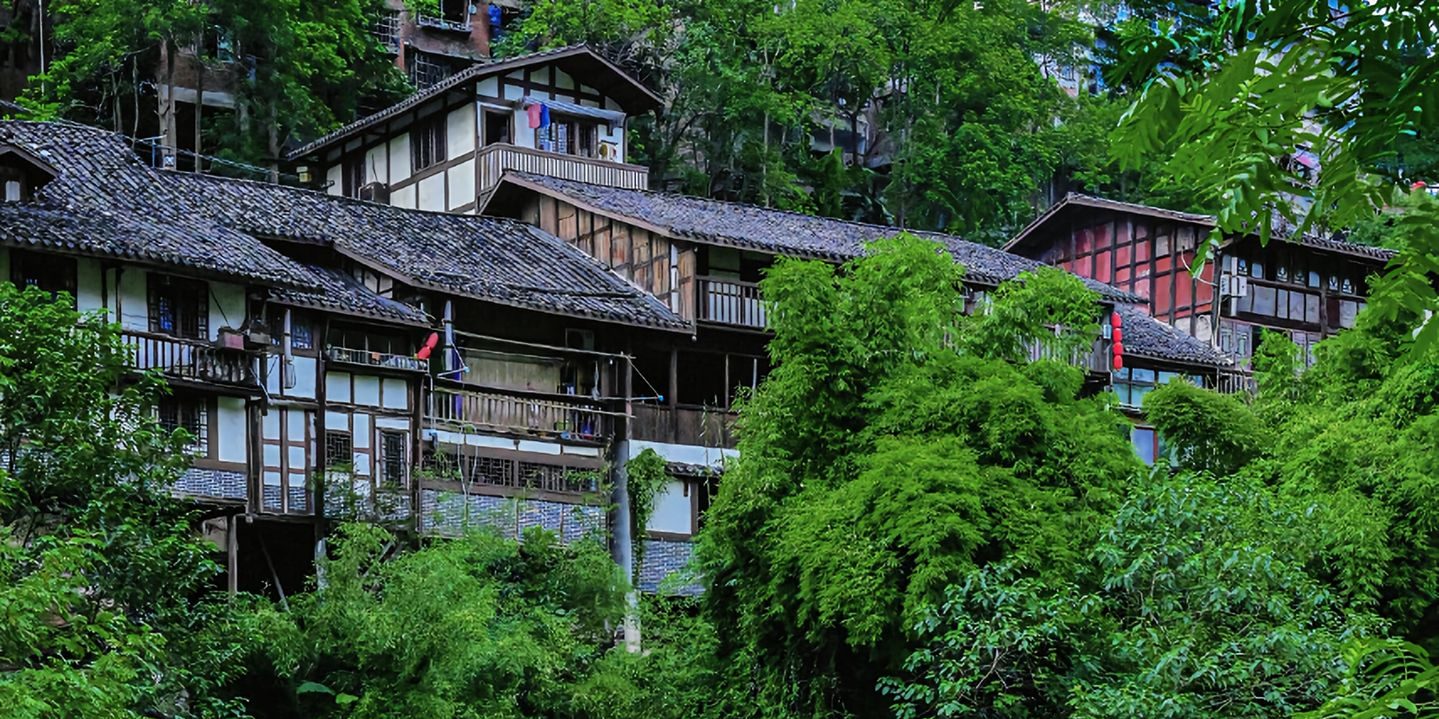
- Walking it: the street runs north to south, and you walk it end to end. The covered inner street is 6–8 m high, with skylights in the roof to let the light in, so you can walk the whole way even when it rains.
- History: from 1694 (the 33rd year of the Kangxi reign of the Qing dynasty), this was a trading centre and a wharf where goods moved between river and road.
- What to eat: stone-slab ciba (sticky rice cakes), smoked tofu and zajiu, a local rice wine. These are the old town's well-known snacks as listed by the Jiangjin District Culture and Tourism Commission.
- On the way: the "Ladder of Love" and Simian Mountain Shaolin Temple are in the same mountains, and the old town sits at the northern foot of Simian Mountain. For whether you can do them on the same day, see two places in one day below.
- Status: a Famous Historic and Cultural Town of China and a national 4A tourist attraction. It is open, with no entry ticket.
Anju Ancient City: how is it different from Zhongshan?
At Zhongshan you see one street; at Anju you see a whole town. Anju Ancient City is in Tongliang District, about 66 km from the main city and about 1.5 hours' drive. It stands where the Fu and Qiong rivers meet. A county was first set up here in the Sui dynasty (588 AD), more than 1,400 years ago. The town has many temples and guild halls, known as the "nine palaces and eighteen temples". Eight of them are still fairly well preserved, and several stone city gates remain.
- What to see: Wanshou Palace, Lower Ziyun Palace, the City God Temple, Dongyue Temple and the Mazu Temple (Tianhou Palace); the Huguang Guild Hall has an opera stage. Each has its own style, so take your time and see them one by one.
- On the hill outside town: Bolun Temple, on a hilltop east of the town, is more than a thousand years old.
- War history: during the War of Resistance against Japan, several classes of Whampoa Military Academy cadets trained at Anju. If you are interested in Second World War history, allow a little more time here.
- Dragon dance: Tongliang is known as the home of the dragon dance, and the old town has performances. The times are not fixed, so before you set off we check whether there is one that day.
- Status: in the fourth group of Famous Historic and Cultural Towns of China, and a national 4A tourist attraction. It is open, with no entry ticket. There are sightseeing buggies in the scenic area that you can ride for a small fee.
Are Wanling Ancient Town and Lukong Ancient Town the same place?
Yes. Wanling Ancient Town was once called Lukong. It is about 12 km east of central Rongchang, the Laixi River flows past the town, and it borders Dazu District to the east and north. That makes it the best fit for the same trip as the Dazu Rock Carvings: the carvings in the morning, a walk round the riverside old town in the afternoon. The old street runs down steps all the way from the hilltop to the river, and local people call it "little mountain city".
- Darong Bridge: a flat stone-slab bridge built in the early Zhengde years of the Ming dynasty, 116 m long, with 27 piers across the Laixi River. It is a protected cultural relic at Chongqing city level.
- Ming and Qing old street: 502 m long, with stone steps all the way from the hilltop down to the river.
- Yanyu Lane: the site of a Southern Song river wharf, a narrow lane between high walls. In 2011 it was named one of Chongqing's ten most beautiful lanes.
- Huguang Guild Hall and the Zhao family ancestral hall: a guild hall and a family ancestral hall built by Qing dynasty migrants, when families from Hunan and Hubei moved west to fill Sichuan.
- Stockade gates: the Darong stockade has four gates. The west gate, the Lion Gate, is the best preserved.
- Tickets: the old street is free. A few small sights in the town (such as the violin museum) and hand-rowed boats on the Laixi River charge extra.
- Status: a Famous Historic and Cultural Town of China and a national 4A tourist attraction.
Laitan Ancient Town: who is it for?
People who like rock carvings and military history. Laitan is on the west bank of the Qu River, about 28 km north-east of central Hechuan. Qing dynasty walls of dressed stone and a barbican enclose the old town by the Qu River, and all four of its gates still stand. Erfo Temple in the town has the largest group of Chan (Zen) Buddhist cliff carvings in China, more than 1,700 figures, with a main Buddha 12.5 m tall. Like Diaoyu Fortress, it is in Hechuan, and the usual plan is to see both in one day.
- In 2003 Laitan was one of the first 10 towns named Famous Historic and Cultural Towns of China.
- The town is a partly open scenic area: you can walk the old street freely, and Erfo Temple and other sights charge separately. The lower hall of Erfo Temple (where the great Buddha is) has closed for a time during repairs in the past few years, so before you set off we check whether it is open that day.
- For how to see it on the same day as Diaoyu Fortress, see Diaoyu Fortress and Laitan.
Songji and Tanghe: which other old towns are quiet?
Two more old towns, one on the Yangtze and one where Chongqing, Sichuan and Guizhou meet, which foreign visitors rarely write about. Songji Ancient Town in Yongchuan is on the north bank of the Yangtze, at the district's southern tip. Tanghe Ancient Town in Jiangjin is where Chongqing, Sichuan and Guizhou meet, about 84 km from urban Chongqing, and is best known for a landlord's manor and a Hakka ancestral hall. Both are open, with no entry ticket.
- Songji (said "song-jee": the second character is read jì here): winding bluestone paths nearly 5 km long, the Luo and Chen family ancestral halls, the old county office, and Chen Gong Weir, a Ming dynasty water project. It was made a national 4A tourist attraction in 2024.
- Tanghe: Ming and Qing buildings covering more than 40,000 square metres. The old street climbs in steps up from the riverside wharf. Shilongmen Manor was first built in the early Qianlong years of the Qing dynasty and has more than 520 rooms. Tingzhong Hall, built in 1892 (the 18th year of the Guangxu reign), is a classic example of a Hakka ancestral hall in Chongqing. Several TV dramas, including Zhi Zui Jin Mi and Jiang Jie, were filmed here.
Short on time: are there other options?
Yes, two. Head north to Beibei: Pianyan Ancient Town is built along the Heishuitan River, with hundred-year-old fig trees on the bank and a small bluestone bridge into the town. It was an old trading town on the old road from Chongqing to Huaying Mountain. If you only have half a day and do not want to leave the city, the Danzishi and Longmenhao old streets in Nan'an are just across the river from Jiefangbei. Go in the early evening and stay on for the night views.
- Pianyan: in summer the river is very shallow, and local people carry tables and chairs into the water to drink tea. Jindao Gorge is nearby.
- Danzishi Old Street: an old street rebuilt on its original site. Stone steps climb about 80 m up the slope, and you look straight out at where the two rivers meet. It is a national 4A attraction with no entry ticket.
- For how to link the old streets in the city into one walking route, see the Nan'an part of where to stay in Chongqing.
Which ancient town should I choose?
Choose by what you most want to see. If you can only go to one and want the most complete old street, choose Zhongshan. For temples and the layout of an old walled town, choose Anju. If Dazu is already in your plan, choose Wanling. For rock carvings and military history, choose Laitan with Diaoyu Fortress.
- The most complete old street → Zhongshan Ancient Town
- Temples, guild halls and city gates, the layout of a whole town → Anju Ancient City
- Already going to Dazu → Wanling Ancient Town, which borders Dazu
- Rock carvings, and the history of the Song and Yuan wars → Laitan + Diaoyu Fortress
- An old town on the Yangtze → Songji Ancient Town
- Old family mansions and Hakka ancestral halls → Tanghe Ancient Town
- Summer with children, time by the river → Pianyan Ancient Town
- Only half a day, staying in the city → the Danzishi and Longmenhao old streets in Nan'an
- Staying a night, an old town on the cliffs → Gongtan (see Wujiang Gallery and Gongtan)
Can I see two places in one day?
Yes, if they are in the same direction and officially next to each other; not if they are in opposite directions. Wanling borders Dazu, Laitan and Diaoyu Fortress are both in Hechuan, and Zhongshan is at the northern foot of Simian Mountain. Anju is west of the main city and Zhongshan is south of it, so go to only one of them in a day.
Two places in one day: does it work? (we adjust to the traffic on the day and your pace)
| Combination | Does it work? | Why |
|---|---|---|
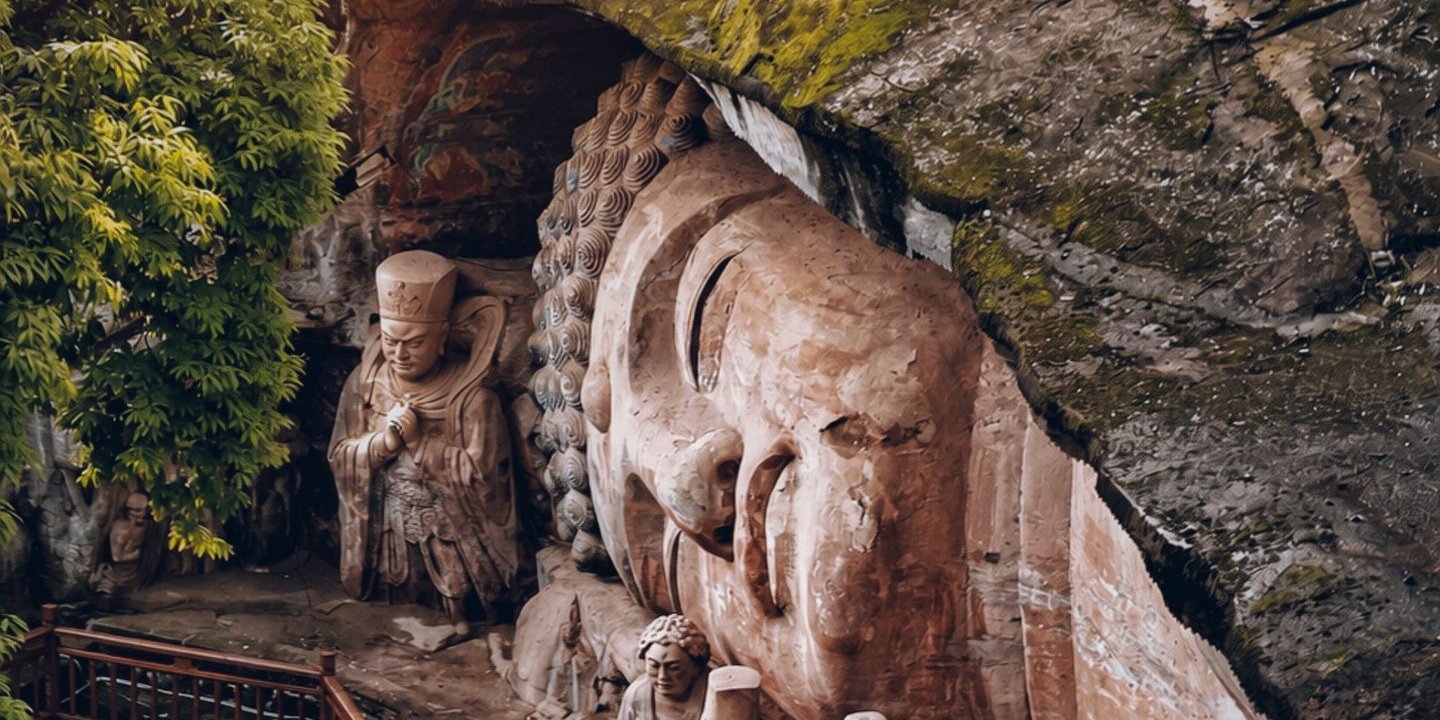
| Wanling Ancient Town + Dazu Rock Carvings | Yes, set off in the morning | Wanling borders Dazu District to the east and north; Baodingshan at Dazu is about 1.5 hours' drive from the city |
| Laitan + Diaoyu Fortress | Yes | Both are in Hechuan; Laitan is about 28 km north-east of central Hechuan |
| Zhongshan Ancient Town + the Ladder of Love | Yes | The Ladder of Love is in the mountains of Zhongshan town |
| Zhongshan Ancient Town + Simian Mountain | Not recommended | The Simian Mountain scenic area is big and worth a day of its own |
| Anju + Zhongshan | No | One is west and one is south, in opposite directions |
| Any old town + night views back in the city | Yes | Head back in the afternoon, then Hongya Cave or the two rivers at night. The car is yours until 23:00, and the guide stays with you for the whole agreed route. |
What should I know before I go?
Three things. First, there are a lot of steps: Wanling's old street goes down steps all the way from the hilltop to the river, and Tanghe's old street climbs all the way up from the riverside wharf, so wear shoes with a good grip. Second, at weekends and on public holidays many local people drive in, so midweek is the quietest. Third, the ancestral halls, temples and museums in each town keep their own opening hours, so go first to the one you most want to see.
- Steps and seniors: the old streets are all paved with bluestone, which gets slippery in the rain. If you cannot manage many steps, tell us in advance. We pick a town for you from the lie of the land in each one, and the guide sets how far you walk and how many places you see around your fitness and pace. See Chongqing for seniors.
- With children: in summer the river at Pianyan is shallow, so children can paddle at the edge while adults keep an eye on them. Bring a change of clothes. See Chongqing with kids.
- Public holidays: some old towns hold lantern fairs and long-table banquets on public holidays (Zhongshan's "thousand-metre long banquet" is the best known). Those days are the liveliest, and also the most crowded.
- Food: have lunch in the town. Each town has its own snacks, such as stone-slab ciba and smoked tofu at Zhongshan. If you don't eat spicy food, tell us in advance and the guide will order for you.
How do we plan an old town day?
We run trips to all of these towns and can fit any of them into your private itinerary. We send a car, a driver and a licensed English-speaking guide as one unit (a Chinese-speaking guide can also be arranged), picking you up at your hotel door and taking you back in the early evening. We set the departure time from the opening hours of the hall or temple you most want to see; where to stop on the way and where to have lunch go at your pace. For prices, see Chongqing private tour prices.
- Before you set off: we check whether there is a lantern fair, a performance or a temporary closure that day, and remind you to bring your original passport.
- What the day looks like: set off in the morning, walk the old street in the late morning, have lunch in the town, add another stop in the afternoon if you like, and be back in the city in the early evening. The guide sets how long you walk and how many places you see around your fitness and pace. If you want night views afterwards, that works too: the car is yours until 23:00, and the guide stays with you for the whole agreed route.
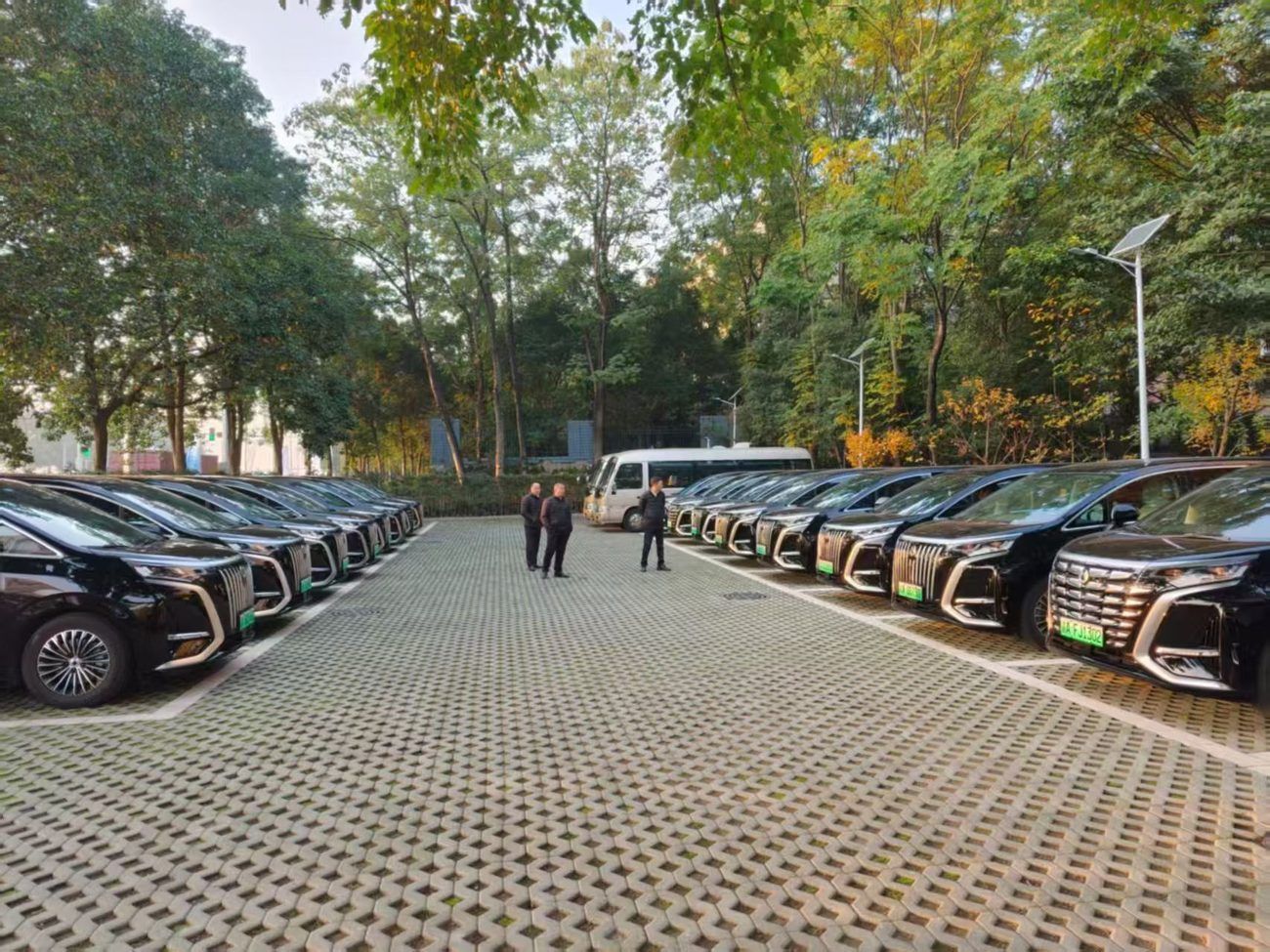
- The car fits the group: 2 people with a guide get a 7-seat car; 3–4 people a 7-seater; 5–6 people a 9-seater; 7–8 people a 15-seater. For a bigger group, tell us how many of you there are and we match the car to the group. If you have a lot of luggage, tell us how many large suitcases and we match the car to the luggage.
- In the town: the guide walks the old street with you, tells you the stories behind the guild halls and ancestral halls, helps you order food and chats with the shopkeepers for you.
- In a longer trip: it fits best on the day after two days in the city. See how many days in Chongqing.
We can fit these old towns into your private trip
Tell us how many of you there are, which day, and whether you would rather see old streets, temples or the riverside. We pick a town for you and plan a one-day itinerary with a departure time.
FAQ
If you can only go to one: for the most complete old street, choose Zhongshan Ancient Town in Jiangjin (about 96 km from the city centre). For temples and the layout of an old walled town, choose Anju Ancient City in Tongliang (about 66 km). If Dazu is in your plan, choose Wanling Ancient Town in Rongchang, which borders Dazu.
Yes. Zhongshan, Anju, Wanling, Songji and Tanghe are all outside the city with no metro, and midweek they are usually very quiet. The first three are about 1.5–2 hours' drive one way from Jiefangbei. Ciqikou is on Metro Line 1 and had 1.579 million visitors over the 2026 Spring Festival holiday.
About 96 km from the city centre, in the south of Jiangjin District at the northern foot of Simian Mountain. From Jiefangbei it is about 1.5–2 hours' drive. The old street has no entry ticket.
Yes. Anju Ancient City is in Tongliang District, about 66 km from the main city and about 1.5 hours' drive. The old town is open with no entry ticket; some temples and ancestral halls may charge separately.
Yes. Wanling Ancient Town was once called Lukong. It is on the Laixi River about 12 km east of central Rongchang and borders Dazu District, so you can see it on the same day as the Dazu Rock Carvings.
Most old streets are free. Zhongshan, Anju, Wanling, Songji, Tanghe and Ciqikou are all open scenic areas. Laitan is partly open, and Erfo Temple and other sights there charge separately. In other towns, some ancestral halls, museums and boats may also charge separately.
Changshou's Puti Ancient Town is a street built in the old style in recent years, not a historic old town. For Ming and Qing old streets, go to Zhongshan, Anju or Wanling.
First tell us how many steps the older people in your group can manage, and we choose by the lie of the land. Wanling's old street goes down steps all the way from the hilltop to the river, and Tanghe's old street climbs all the way up from the wharf. All the old streets are bluestone and slippery in the rain. In the town, the guide works around the seniors' fitness and pace.